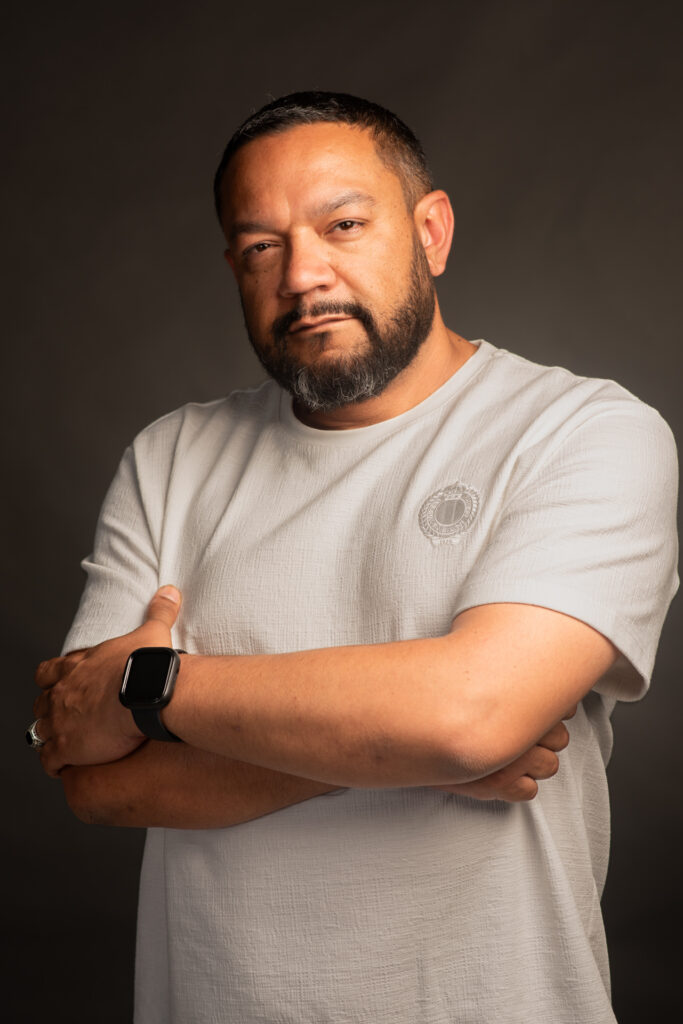
Benjamin Overmeyer on Gambit Films, Cape Town and storytelling
18 September 2026
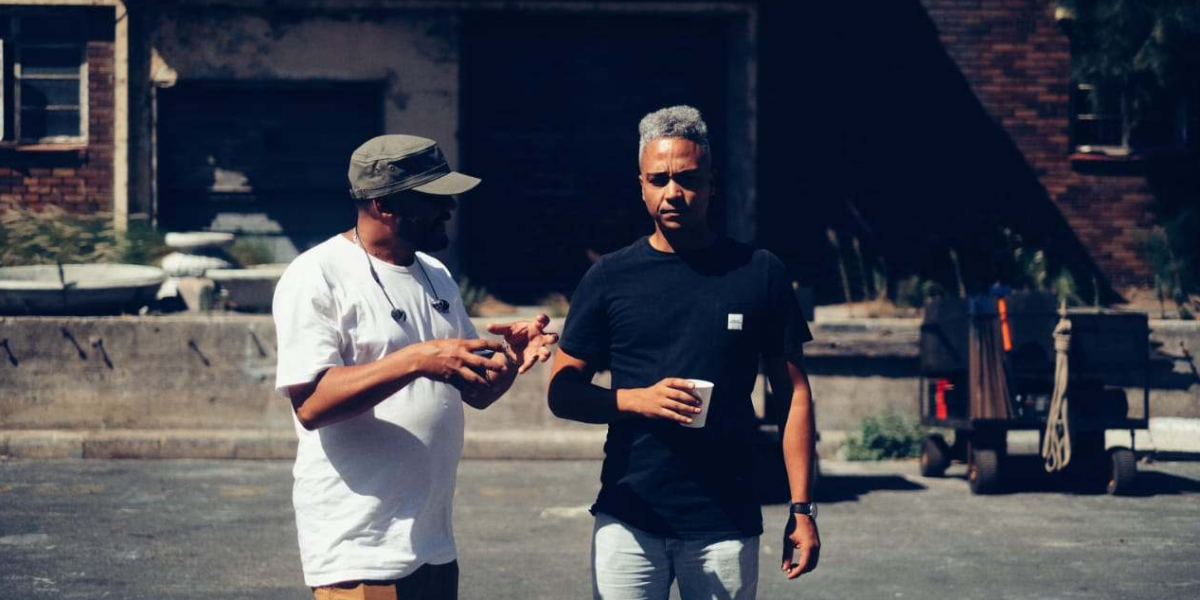
With more than two decades of experience in film, television and radio, Gambit Films COO and Executive Producer Benjamin Overmeyer has built a career grounded in leadership, collaboration and love for the craft of storytelling. In this conversation, Benjamin reflects on the lessons learned across his career, the unique advantages of producing in Cape Town, and why South Africa is well positioned to tell authentic stories that resonate with audiences around the world.
Q. You’ve built a career spanning more than 20 years across film, television and radio, looking back, what first drew you to the production side of the industry, and how has your journey shaped the producer you are today?
I was drawn to production by a long-held ambition to become a Producer. I came to believe that Producers are the ones who conjure and give shape to the blank canvas — the platform on which creatives can build and realise their visions. Without a Producer, there is no film, no show; the work simply does not exist.
As a youngster, my first real passion was team sport. The particular game mattered less than the participation itself — I threw myself into whatever was on offer, and thrived. For a long time I assumed the joy lay in the sport. In time, I came to understand it was the dynamics of a team that I loved and excelled in. I was a natural leader, more often than not the captain, if not the one calling the shots, and I had an instinct for what made a team better — and I knew that better teams won more games.
My journey in the industry began humbly, as a runner and then a Production Assistant on commercials in Johannesburg. To be a PA was to be woven into the fabric of the production team, supporting every department as needed. From there, the natural arc of progression beckoned: Production Coordinator, then Production Manager, and onward toward Line Producing, with Producing itself on the horizon. I was fortunate, early on, to land full-time work as a PA at a production company specialising in music video production and, later, twenty-four-hour music television broadcasting. Because we were a small, tightly knit team, this proved fertile ground for growth — I rose to Coordinator and frequently found myself filling the shoes of Production Manager, and at times Producer. The channel’s sheer range of formats meant we absorbed invaluable, wide-ranging skills in bringing its many shows to life.
The next chapter took me into the world of television drama as a freelancer, where I broadened my repertoire to include Assistant Directing. The AD occupies a singular position on any set — the bridge between the floor and the production office. It is a role of constant balance: weighing the creative ambitions of a show against a schedule that is, in turn, governed by budget. The AD solves for time and money, commands the team on the floor, and works to draw the creative vision out of the technical machinery, all while keeping the lines of communication with production open and alive.
That experience as an AD has shaped, more than anything else, the Producer I am today — teaching me to respect the creative work enough to protect it and make room for it, even as I hold the line on schedule and, crucially, budget. But above all, it taught me that filmmaking is a team sport: the product of an entire collective of people working in concert to tell a single, unified story. The best outcomes come from respecting the humans doing the work, and from building spaces where every one of them has an equal chance to thrive. That, to me, is the finest expression of what a Producer does — beyond the pitching, the fundraising, and the business responsibilities that sit behind every film, television show, production company, and the partners who make it all possible.
Q. You’ve worked across a remarkably diverse range of productions, from Suidooster and Blood & Water to feature films such as Nommer 37 and Indemnity. What have some of these very different projects taught you about producing and managing successful productions?
Diversity is a powerful force in every arena of life. It deepens and broadens our experience, and enriches the very fabric of living. This has proven equally true across my professional journey. For me, it begins with one’s own life in general — the more colourful and varied that journey has been, the more one has to offer any given situation. Both the good experiences and the hard ones shape us, and each leaves its mark on the daily reality we engage with.
As a Producer, you soon learn that opportunity determines the kind of story you get to tell at any given moment. We all carry a story we long to tell, and whatever the obstacles, we will find a way to pursue that particular, personal story — a passion project, in essence. And yet most projects are born from an altogether different set of places and circumstances, ones over which we have little control. The ability to pivot towards opportunity matters just as much as having a story to tell, particularly when running a business with obligations within the creative industries. One has to remain open to recognising such opportunities in order to build something sustainable. Unless a project is self-funded, there are always other interests to weigh — the needs of financiers, or of a partner such as a streamer, broadcaster, or commercial entity in pursuit of return on investment.
Much of this, too, is shaped by the audience and by the zeitgeist of the moment. Perhaps the greatest challenge is pitching or selling an idea within today’s mindset, all the while knowing that the time our craft takes to reach the market means it will ultimately land in a moment we can only speculate about. Predicting that moment is something of a holy grail — the entire industry spends a great deal of time deliberating over it, and it is often here that opportunity is truly shaped. Sometimes you find yourself with the right story at the right time; sometimes you don’t. But every story has its moment, and we have seen ideas shelved for years only to return to great success.
One of the great lessons drawn from the diversity of projects we have produced is the importance of developing within the guardrails of each individual format — creatively and financially alike — and of building shooting models that allow the creative vision to be realised without compromising the budget. But the deepest learning, above all, has come from growing the company itself, and from the particular difficulties of sustaining a production company within the context of the South African industry: understanding how different types of projects affect the business model as a whole, and learning to navigate accordingly.
Q. As COO and Executive Producer at Gambit Films, you’re involved in both the creative and operational sides of the company. What does your role look like behind the scenes, and how do you balance the creative ambitions of a project with the practical realities of production?
As COO and Executive Producer at Gambit Films, my role touches every facet of the company — from the organisation’s growth to its capacity to deliver film and television sustainably and at the highest level, consistently. Behind the scenes, this means developing the workflows and models that uphold storytelling as our fundamental strength. With internal teams spanning development, production, and post, Gambit Films is, at any given moment, invariably present across every phase of film and television production simultaneously. Managing the teams and processes across that spectrum demands a commitment to best practice in communication, integrity, accountability, and inclusion.
Having robust systems in place allows us to replicate quality creative work, even as each project differs vastly from the last. At its core, filmmaking remains consistent in its mechanics. By vertically integrating our internal team into each of our productions, we achieve consistency across titles even where different production teams are assigned to each one. A creative bible helps establish a given title’s creative aspirations and gives the whole team a reference point from which to orient themselves to the vision — a discipline that serves creative continuity across every phase of production, and helps the vision immerse and converge across departments. The same principle holds for building workflows, both internally and for each title in turn.
Over time, the lessons learned have proven invaluable for consistency, capacity, and growth, as well as for balancing creative intent against the constraints of schedule and budget. With that experience, it becomes ever easier to spot opportunities for elevated production value wherever they arise.
Q. What makes a location like Cape Town attractive when you’re considering where to develop and produce a project?
First and foremost, Cape Town is home. It is where our stories originate, and if we are to tell authentic stories in our own voice — stories we have the authority to tell — then this is the home from which we speak.
Secondly, it is no secret that Cape Town is a phenomenal city in which to film almost anything, for a great many reasons. It is one of the most beautiful locations on earth, and nature offers a bountiful basket of backdrops for any story imaginable. The rare combination of ocean, mountain, desert, and both urban and rural landscape opens up a multitude of possibilities. Within the urban world alone, one finds every register of architecture, texture, and mood — from the hugely affluent to the intensely gritty. The townships and the Cape Flats add still further to this wealth of possibility, even before the story itself has been decided upon.
Furthermore, we find ourselves in an era of the industry in which home-ground advantage carries real currency, both in raising finance and in landing commissioned work. An authentic voice in the telling of a story is, in itself, valuable currency. Gambit Films is built by local people — people with a genuine passion for this city — and we take great pride in being trusted custodians of its stories.
Q. From your experience, what do you think the city offers filmmakers that can’t necessarily be replicated elsewhere?
I believe the city offers filmmakers a great deal, and much of it is bound up with our identity as South Africans more broadly, not only as residents of the Western Cape or Cape Town. I mean, by this, our characters and our cultures — we are a nation with a great deal to offer the world of storytelling: an abundance of extraordinary, at times unbelievable, and thoroughly unique realities that lend texture and nuance to our stories.
More practically, the specific offerings of Cape Town as an industry hub are unmatched on the continent, if not in the country as a whole. A long legacy of service work has given us access to world-class service providers, equipment, and studios, along with raw talent trained on some of the largest productions in the world. The local industry offers filmmakers almost every piece of hardware, software, and human ingenuity available anywhere on the globe, and the City itself provides remarkable support in helping us realise our creative ambitions. Combine all of this with a great script and a great team, and remarkable things become possible — as we at Gambit Films have experienced time and again.
Q. What are some of the logistical or production advantages of filming in the city that audiences may not see on screen?
As mentioned above, it is the sheer abundance of services and skills across Cape Town’s ecosystem that sets it apart. A deep pool of talent, capable of filling the many roles and services required to make a film or television series, gives filmmakers here the support they need, regardless of a production’s scale or scope. There is no blueprint for making a film — each one is different — and living in a city like Cape Town means being able to find the right partner for any given project, whether that is gear rental, SFX or VFX vendors, or studio facilities. The options are there.
Just as vital is having a city film office that understands the full breadth of creative possibility any project might hold, and is willing to do the near-impossible to help make it happen. Nor is there any shortage of creative talent in the city — from writers and directors to production designers and wardrobe stylists, Cape Town has so much to offer in the way stories are told. It is a community, and this, above all, is a team sport.
Q. What impact does bringing larger productions to Cape Town have on the local industry, particularly in terms of skills development, employment and opportunities for local crew?
For all the factors that make Cape Town a wonderful place to film, as a local industry, the service sector has thrived alongside it in equal measure. The legacy of skills development, employment, and opportunity it has generated has been extraordinary, and directly advantageous both to the city at large and to the film industry in particular. For local crews, exposure to the skills demanded by international productions has sharpened their own craft and aligned it with current best practice, improving their prospects for future employment in turn. The real benefit, though, lies in bringing these same skills to bear on local productions.
Across the full life cycle, the ideal outcome is greater investment in locally produced films, alongside an environment that remains welcoming to servicing larger productions here at home. Together, these would translate into further employment and greater opportunity across the industry.
Q. Cape Town is known internationally for its locations, but what do you think are some of the less obvious strengths that make the city an attractive production hub?
As mentioned above, there is truly no end to the list of things that make this city so attractive as a production hub. For us as a production company, Cape Town delivers world-class solutions to every phase of our business model. Beyond the locations and the obvious advantages it holds for any moving-picture creative enterprise, the technological backbone supporting the local post-production ecosystem is both world-class and fully operational. Together with our partners in the city, we deliver globally successful content reliably and consistently. It is this combination of cutting-edge digital technology and raw talent that has been key to our ability to tell our stories shoulder to shoulder with our peers around the world.
Q. Where do you see the biggest opportunities for Cape Town and South Africa to attract and develop more productions over the next few years?
Amid a global scaling-down of resources for filmmakers everywhere, the industry is searching for ways to create great content on smaller budgets. At the same time, the rise of global streaming has cultivated a worldwide audience hungry for more great, authentic content. Between these two forces lies opportunity for producers, local and international alike.
Where the journey from major-budget productions down to dramatically reduced numbers remains all but impossible for those accustomed to those big budgets, the ability of local producers to deliver strong production value opens up a far greater range of possibilities as the budget ceiling moves upward. In short, it is a much longer road for a major studio to travel from a huge blockbuster budget down to a modest one than it is for a local producer, already accustomed to delivering on-par content at that modest level, to make use of the additional bandwidth afforded by a meaningful uplift into a somewhat larger landscape.
These are precisely the kinds of opportunities awaiting the local industry in the years ahead — opportunities that create employment as well as the chance to operate at a level more in step with our peers globally. The growing appetite for more grounded content and authentic narratives and genres opens up further opportunity still, as this convergence of forces aligns remarkably well with our current positioning here at home.
Q. Looking ahead, what kinds of stories or projects would you love to bring to Cape Town, and what would you like to see the city become known for on the global production stage?
The excellence of our storytelling as a nation, as a people, is essential to our identity and matters enormously to who we are. As a city, a country, and a continent, we take pride in the articulation of our experiences and the expression of our art — in the cultural impact we have on humanity, and on ourselves as individuals. I am because we are.
Through the making of films, the telling of our stories, and our partnerships with platforms around the world to reach audiences, I would like to see this city recognised for its contribution to, and support of, this industry. To that end, the team at Gambit Films looks forward to the opportunity to tell many more stories, across both film and television.