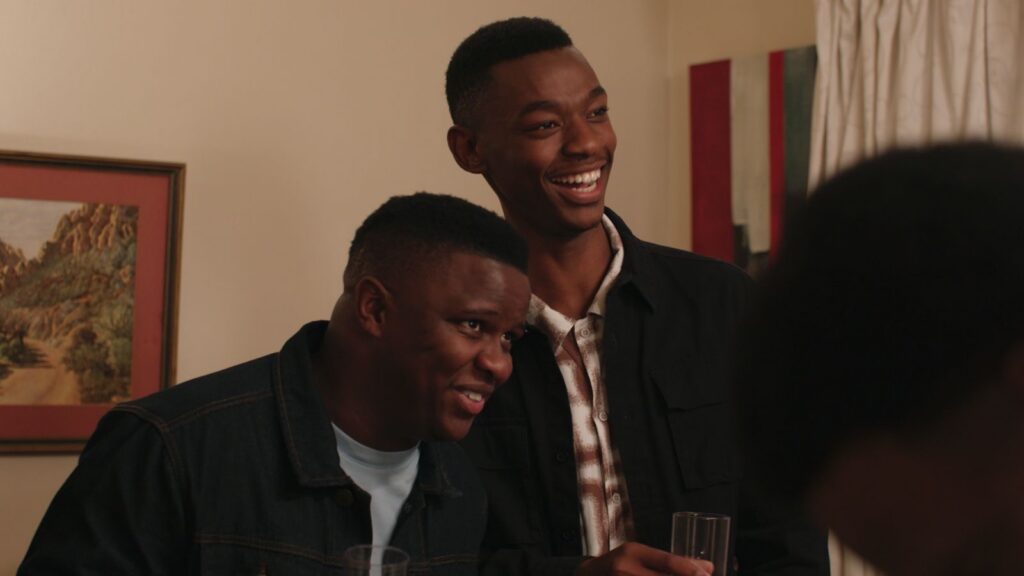
For Aphiwe Sithole, every role is a chance to learn
2 October 2026
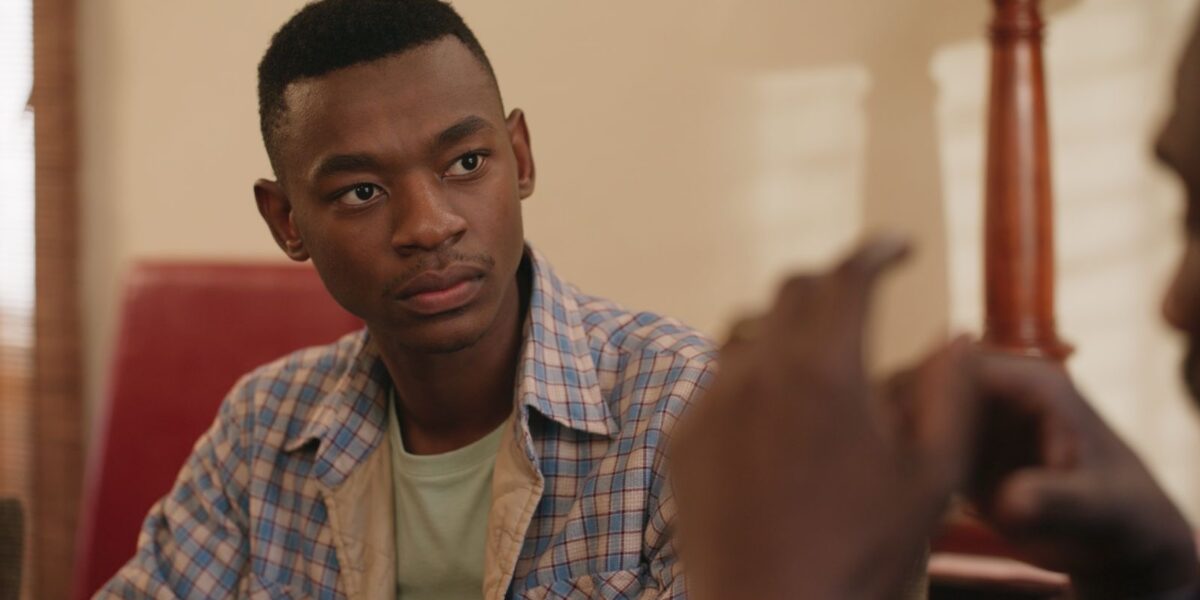
From a modelling career that began in 2016 to standout performances in productions such as Poppie Nongena, Donkerbos and Kelders van Geheime, Aphiwe Sithole has steadily established himself as one of South Africa’s promising young actors. Born and raised in Khayelitsha, Cape Town, Aphiwe’s journey into acting was driven by a passion for storytelling and a desire to connect with audiences through his performances. We caught up with him to reflect on his journey in the industry, the experiences that have shaped his approach to acting, and his ambitions for the future.
What first sparked your interest in acting, and what made you pursue it professionally?
My journey into entertainment actually started through modelling in 2016, and that experience opened my eyes to the world of performance. I realised that what attracted me wasn’t only being in front of a camera, but the ability to communicate something through presence, emotion and storytelling.
Acting became the natural next step for me because I wanted to go beyond simply being seen and actually have something to say through the characters I played. My acting debut was in Poppie Nongena, alongside incredible performers like Clementine Mosimane and Nomsa Nene, and that experience showed me very early on what it means to take the craft seriously.
Since then, I’ve approached acting as a craft that requires constant learning. Every character, every director and every production has taught me something different, and that’s what continues to make the journey exciting for me.
Looking at your career so far, how would you describe your growth as an actor? Are there particular moments or roles that you feel changed the way you approach your craft?
I think my biggest growth has been learning to trust myself more as an actor. When I started, there was naturally a lot of self-consciousness you know, wanting to make sure I was doing everything correctly. As I’ve gained experience, I’ve realised that sometimes the most powerful performance comes from being present and allowing yourself to actually live in the moment.
Poppie Nongena was a very important starting point for me because I was surrounded by actors with so much experience. Being part of that production taught me about discipline and about respecting the story you’re part of.
Donkerbos was another important step because it allowed me to work within a darker, more complex world. The series moves between English, Afrikaans and Venda, and being part of a production like that expanded my understanding of how language and culture can influence storytelling.
Then Kelders van Geheime brought another kind of growth. Athandwa is a character I connected with personally, so I had to learn how to use parts of myself without simply playing myself. That has made me much more conscious of the difference between identifying with a character and actually creating a character.
You’ve worked across television, film and different genres. How do you approach preparing for a new character, especially when the role is very different from anything you’ve played before?
I start with the person before I start with the performance. I want to understand who this person is, where they come from, what they want, what they fear and what has happened to them before the audience meets them.
I also spend a lot of time thinking about the character’s circumstances. What is their environment? How do they speak? How do they carry themselves? How do they respond when they’re under pressure?
The more different the character is from me, the more curious I become. I don’t want to judge the character from the outside. I want to understand their logic, even if I don’t agree with their choices.
And then there comes a point where you have to stop thinking and trust the preparation. For me, that’s when the character starts becoming alive.
What has been one of the most challenging characters you’ve had to portray, and what did that experience teach you about yourself as an actor?
Athandwa in Kelders van Geheime has definitely been one of the most meaningful challenges for me.
What made him challenging wasn’t necessarily that he was completely different from me. In fact, it was the opposite. Athandwa and I share similarities in terms of coming from humble beginnings and wanting to make something of ourselves. He is also someone who remains grounded when the people around him become emotional.
His story also carries a lot of emotional weight, particularly the loss of his mother and everything that happens around his family. I had to understand how someone carries that kind of pain while still choosing to move forward.
That experience taught me that sometimes you don’t have to manufacture emotion. You have to understand the character deeply enough that the emotion comes from the circumstances. It made me trust subtlety more and reminded me that strength in a character doesn’t always have to be loud.
You’ve worked on Afrikaans-language productions, including Kelders van Geheime. What has that experience been like from an acting perspective, and has working in another language influenced the way you approach a character or performance?
It’s been a really valuable part of my development.
I’ve worked in Afrikaans productions before, so Kelders van Geheime wasn’t my first experience in that world. I also understand and speak some Afrikaans, which helped me navigate the environment.
But working in another language still makes you more conscious of your performance. You become very aware of pronunciation, rhythm, intention and the way a character communicates beyond just the words they’re saying.
What I really appreciated about Kelders van Geheime was the opportunity to learn about a different cultural environment and even things like life on a farm. It reminded me that acting is also an opportunity to step outside of your own experience and understand how other people live.
I think working across languages has ultimately made me more attentive as an actor. I listen more carefully, and I think more about what exists underneath the dialogue.
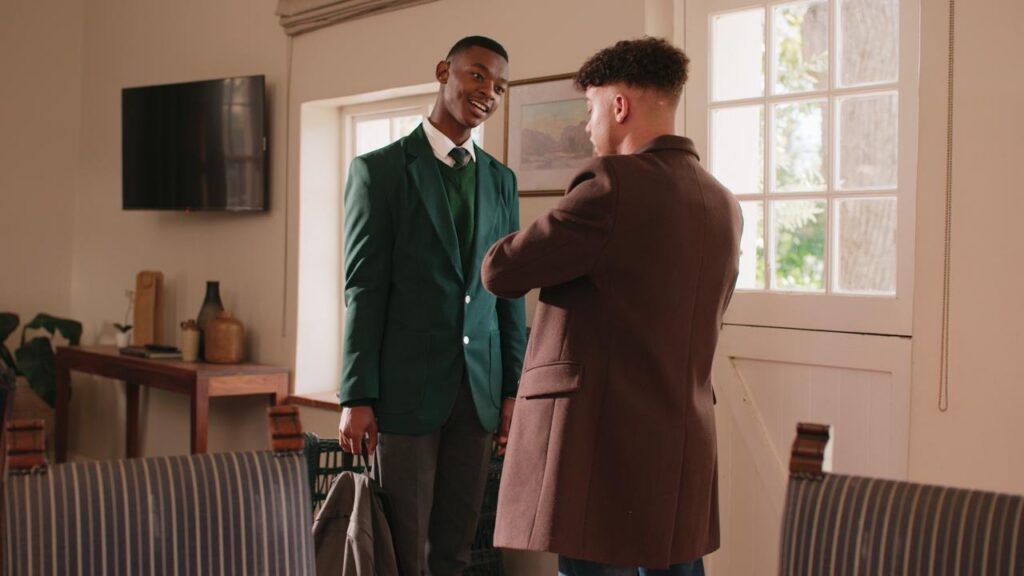
Acting often requires you to find something personal in a character while still creating someone completely different from yourself. How do you find that balance when building a role?
I think the key is finding the emotion rather than copying the circumstances.
A character might have a completely different life from mine, but they can still experience things that I understand love, ambition, fear, disappointment, family, loss or the desire to be accepted.
That’s where I find the connection.
Once I’ve found that emotional truth, I can then build the things that make the character different from me, their background, their mannerisms, their circumstances, their way of speaking and the choices they make.
Athandwa was a good example of that because there are elements of his story that feel familiar to me, but he is still his own person. I don’t want the audience to see Aphiwe pretending to be Athandwa. I want them to meet Athandwa.
What have you learned from working with different directors, actors and crews throughout your career? Has there been a particular person or experience on set that had a lasting impact on you?
I’ve learned that filmmaking and television are collaborative art forms. You can prepare as much as you want as an actor, but you’re still part of a much bigger machine, and you have to respect every person contributing to the final picture.
One of the biggest lessons has been learning to listen. Sometimes a director will give you one small adjustment that completely changes the scene. Sometimes another actor gives you something unexpected and you have to respond to it rather than sticking rigidly to what you planned.
My first production, Poppie Nongena, was particularly significant because I was working alongside people like Nomsa Nene and Clementine Mosimane so early in my acting journey.
More recently, working with Mbulelo Grootboom and Aviwe Ngabom on Kelders van Geheime reminded me how important genuine relationships are between actors. Aviwe and I developed that brotherly connection very naturally, and it made the work feel truthful.
The South African screen industry is constantly evolving, with more locally produced stories reaching different audiences. What excites you most about the opportunities available to South African actors today?
What excites me most is that we have so many stories that haven’t been fully explored yet.
South Africa is incredibly diverse. We have different languages, cultures, communities and histories, and I think there is enormous potential in telling those stories in ways that feel authentic while still reaching audiences beyond our borders.
I’ve experienced that personally through productions that move between different languages and cultural environments. Donkerbos, for example, combines English, Afrikaans and Venda, while Kelders van Geheime has given me the opportunity to work in an Afrikaans-language production as a Xhosa actor.
I think the exciting thing is that South African actors don’t have to limit themselves to one kind of story or one kind of audience. We can tell local stories with a global ambition.
For me, the goal is to keep growing while representing where I come from authentically.
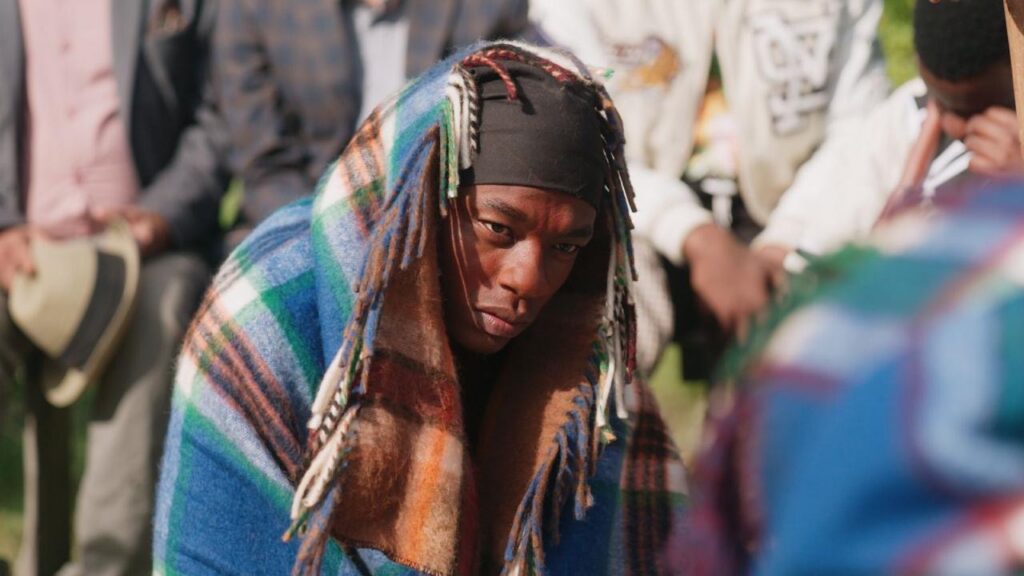
Cape Town has been an important backdrop for so many South African productions. What has working in the city and being part of its film and television industry meant for your career?
Cape Town is home for me, so being able to build a career here is something I don’t take for granted.
I was born and raised in Khayelitsha, and Cape Town has shaped a huge part of who I am.
There is something special about being able to work in an industry that is happening in the same city that raised you. You see different communities, landscapes and cultures around you every day, and all of that becomes part of your understanding as a storyteller.
Cape Town has also shown me that you don’t have to come from the traditional centres of the entertainment industry to build something meaningful. You can come from a township, have a very specific story and background, and still find your place on screen.
For me, Cape Town isn’t just a location where I work. It’s part of my identity, and I think that naturally comes through in the stories and characters I choose.
When you look at the next chapter of your career, what kind of roles or stories would you love to take on that would push you creatively and show audiences another side of Aphiwe Sithole?
I’d love to take on roles that people wouldn’t immediately expect from me.
I want to explore characters that are psychologically complex and emotionally demanding, characters where the audience might not immediately know what they’re thinking or what they’re going to do next.
I’d also love to explore more genres. Drama has given me a strong foundation, but I’d be interested in challenging myself with more action, psychological thrillers, crime, comedy and even international productions.
Ultimately, I don’t want to be defined by one character or one type of role. I want to have a career where, years from now, people can look back and see a real range.
I’m also interested in stories that say something about who we are as South Africans and Africans, but without feeling like I’m trying to prove anything. I want the story to come first.
The next chapter for me is really about expansion as an actor, as a storyteller and as a creative. I want to keep surprising people, including myself.