Telling African stories that inspire with Khosie Dali
9 October 2026
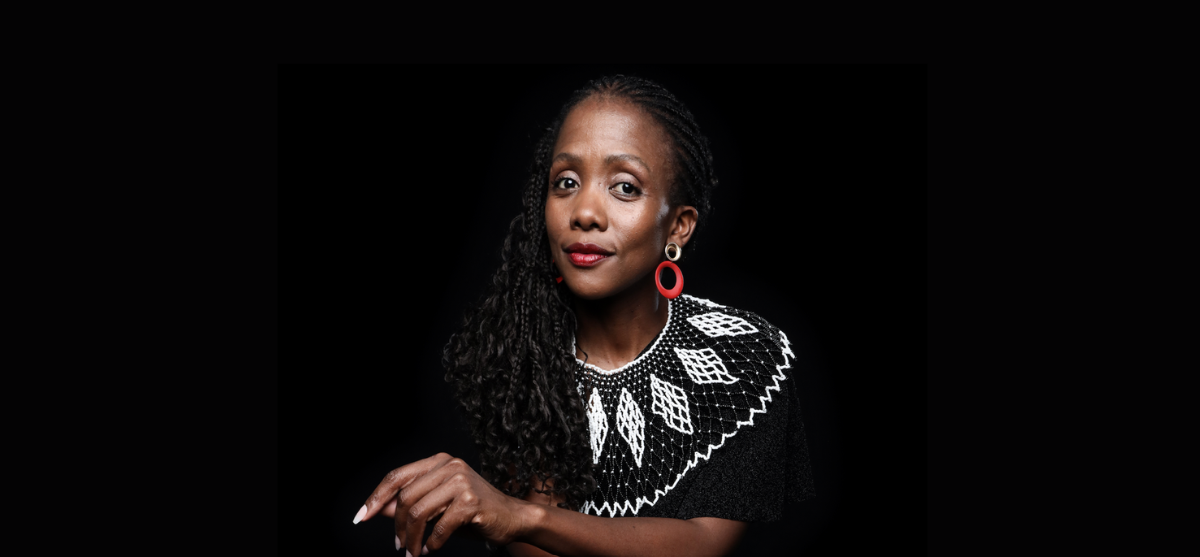
From her first day on set as a production assistant to producing films that travel the world, Khosie Dali’s journey is a testament to the power of persistence, relationships and the stories we choose to tell. In this week’s Film Cape Town Q&A, she reflects on the people and experiences that have shaped her career, the importance of telling African stories, and her vision for creating films that inspire audiences to dream beyond their circumstances.
Q. If you could go back and watch the moment you first stepped onto a set, what do you think that version of you would say about where you are today?
If you could go back and watch the moment you first stepped onto a set, what do you think that version of you would say about where you are today? I remember that moment as if it were yesterday. The set was at the Kimberley Hotel, on Roeland Street (a street I only heard about from the Monopoly board game) and I had absolutely no idea what I was going to do, as a “PA”. By the time I arrived, I had already had a dramatic morning where I was involved in a smash-and-grab incident, but I decided it wasn’t going to ruin my day. I was excited and nervous at the same time, not knowing what to expect. The set was busy and bustling, with dark lighting, cables, props, costumes everywhere and all the furniture rearranged. Everyone was on a mission, knowing what to do and where to go. The costume stylist saw that I was looking around, a bit lost and asked if I was an extra. I just said yes but I mentioned the name of the producer I had come to meet. I went in there for an interview, but that day ended up being my first day on my career. I think that version of me wouldn’t believe that I’m now a producer, managing crews and travelling around the world to film labs and festivals. She’d probably be thinking, “Wow, that lady looks so cool. How is she so confident and how does she know all these people?” She probably wouldn’t believe that some of the same people I met that day became friends, or that I would still know so many of them today. She’d be very proud to see how far we’ve come
Q.What’s something about working in film and television that you didn’t understand until you experienced it for yourself?
Oh, I think there’s so much, and it’s so hard to answer because back then there was so much I didn’t know, and didn’t even think about. The family/community aspect is something I always find interesting. We spend 12 hours a day with people go through stressful situations together, solve impossible dreams together, celebrate together, and those relationships stay with you. It’s also how filmmaking is actually about people management. Yes producing is about schedules, budgets and logistics but ultimately as a good producer you are managing personalities, emotions, egos, hopes, fears and relationships.
Q. As a producer, is there a story or project you’ve worked on that stayed with you long after production wrapped, and what made it particularly meaningful to you?
Four Corners, directed by Ian Gabriel, definitely stays with me. I was given such an incredible opportunity to learn on that film, because I was involved in the development, preparation and production. I got to experience so many different parts of making a feature. I really enjoyed working with the actors; the young kids, the very experienced cast, the reformed gangsters and even real gangsters. I watched people from the casting process, through rehearsals and then onto set, and it was fascinating to see how everything came together. I also made a lot of meaningful relationships on that job, and I’m still in touch with so many people from the film today. One of the actors was also on my very first feature I produced, and because he knew me from back then he did not even hesitate on jumping on board to be with us. I think that’s some of the things that has stayed with me most; what I learnt about filmmaking, and the people I met along the way.
Q. Producing often means balancing creative ambition with practical realities. How do you protect the creative vision of a project while navigating budgets, schedules and the demands of production?
This one is incredibly tricky, wanting to have your cake and still eat it! I think my biggest strength when it comes to that is my negotiation skills, finding ways to convince people to come on board and actually be excited to do so. The power of forming meaningful relationships always goes a long way. It’s also about knowing that you don’t have to say no to everything. Sometimes you have to find different ways to make sure things happen, while still being realistic about the budget, the schedule and what is possible.
Q. When you’re deciding whether to take on a project, what are the things that make you say, “This is a story worth telling”?
Right now, it’s about the energy that I get from the person approaching me with the story. Their enthusiasm for it, how much work or thought they’ve put into the project, and whether it feels like it could be someone I wouldn’t mind spending a lot of time with, because making a film is a long process. When it comes to the story, I think about: Does it move me? Can I relate to it? If not personally, am I learning something new? Does it say something about the world? Do I “get it” without having to listen to or read it many times? Is there a strong message within it? And, importantly, would I still care about this story after two years of development? Right now, I’m drawn to stories that make me feel something and make me curious about the world or the people in it. I’m interested in stories about Black people and African experiences, whether that’s through history, contemporary life, culture, music, sport, love or the things we dream about. Stories that allow us to see ourselves differently and celebrate where we come from and what we’re capable of.
Q. What do you think makes a strong producer beyond the logistics of getting a project made, and which qualities have become most important to you throughout your career?
A strong producer is someone who has resilience, who can keep going even when facing rejection, challenges and adversity. Someone who’s able to find a good balance between their personal feelings and getting things done. It does get tough and super lonely at times, so one has to find communities to keep their sanity in check. A lot of us experience burnout as well, so it’s also about recognising the importance of having a balance in life and finding your own healthy ways to release and reset. I think you can be very passionate about the work and still recognise that you are a person outside of the work.
Q. Film sets can be intense, unpredictable and often a little chaotic, what’s the most unexpected thing that’s happened to you on set?
Yeah! So many things happen. There have been times when we’ve arrived on set and the production design is not at all what was discussed through numerous meetings and verification checks. The clients are about to arrive, the crew and cast are ready, and suddenly you have to get the whole crew involved in a solution attack and figure out how to make it work. But a beautiful and completely unexpected thing that I really loved recently,was being on set when we had a herd of elephants in the bushes come into frame as if they were paid background, at exactly the perfect time. That was so magical. Evryone on set went deadstill, so as to not ruin the moment. You can plan so much on a film set, but you can’t plan for something like that
Q. Cape Town has played everything from small-town streets to international cities on screen, if you could transform one Cape Town location into the setting of your dream film, where would you choose?
The townships, man. If I had to pick one, I’d say Khayelitsha. It’s so vibrant and full of energy. It’s the streets, the people, the movement, the contrast between hardship and joy, and the sense of community. I’d make a coming-of-age fantastical film set there, where young people can see themselves and see possibilities beyond their dreams. I’d love to show a side of Khayelitsha that feels magical and full of possibility, while still being rooted in the reality of the place. And actually, one of the things I’m enjoying about working on Street Surfer, (feature film in development) is that we’re looking at Cape Town in a completely different way. We’ll recreate the 1990s through locations around Woodstock and Sea Point. There’s something exciting about using places we know so well and making audiences see them as another time and another world. That’s one of the things I love about film, that we can transform a place without changing the place itself
Q. What’s one thing you wish audiences understood about what happens behind the scenes of making a film or series?
Just how much work goes into making something look so effortless. At the same time, I think the audience’s job is to just enjoy the film without thinking too much about everything that went into making it. As filmmakers, when we watch a film, we’re thinking about the locations, the costumes, the acting, the lighting, the production design, all with a critical eye. There can be so much happening behind one simple moment on screen, and the audience doesn’t necessarily need to know any of that. If they’re completely absorbed in the story, then we’ve done our job
Q. South African stories are travelling further than ever what kind of local story do you think the world is still waiting to discover?
As I mentioned briefly, I think it’s a story where Black kids are allowed to escape and dream their way out of poverty or difficult circumstances. A film where they can see themselves as the powerful human beings they are. I’d love to see stories where they can imagine, be magical, be funny, flawed and adventurous, without poverty being the entire story. Stories where they can dream freely, see possibilities beyond their circumstances and imagine a future that is bigger than what they currently see around them.
Q. If you had unlimited creative freedom, no budget, no schedule and no rule, what kind of film or series would you make?
Stories of love, hope and fantasy, where the sets feel like dreams and storybooks. If there were genuinely no budget and no rules, I’d want to create completely impossible worlds — enormous sets, fantastical cities, places that don’t exist, worlds that feel like you’ve stepped inside a dream. I’d love to make the kind of films where you can imagine anything. Maybe even an anthology series where every episode creates a completely different world, like Black Mirror, but with the freedom to go completely wild with the visual world-building. One story could take place in a futuristic African city, another in a magical world, another somewhere completely outside anything we recognise. I’d want to create films that make people say, “How did they even make this?” and then get completely lost in the world. I think there’s something really special about films that allow you to dream — and if there were no budget, I’d want to take that as far as humanly possible.
Q. When you look at the next chapter of your career, what’s the one thing you’d love to do that would make you think, “Okay, I’ve really done it”?
I’d love to have a bigger slate of films, create opportunities for young filmmakers and continue making work that genuinely affects people’s lives. I’m also interested in finding ways for film to have a much bigger impact in Black communities beyond just watching the film. I want to bring more African cinema into communities, create spaces where people can experience and engage with our stories, and help grow audiences for African films. I want to build an ecosystem around the work that creates opportunities, develops people, grows audiences and can sustain my career as well as the careers of the people working alongside me. I think that would make me feel like I’ve really built something, something that can continue beyond any one project


