This website or its third party tools use cookies, which are necessary to its functioning and required to achieve the purposes illustrated in the cookie policy. If you want to know more or withdraw your consent to all or some of the cookies, please refer to the cookie policy
. By closing this banner, clicking a link or continuing to browse otherwise, you agree to the use of cookies.
Home » Silas en die Ysbeer op Tafelberg: A Cape Town story of imagination, loss and wonder
Silas en die Ysbeer op Tafelberg: A Cape Town story of imagination, loss and wonder
12 August 2026
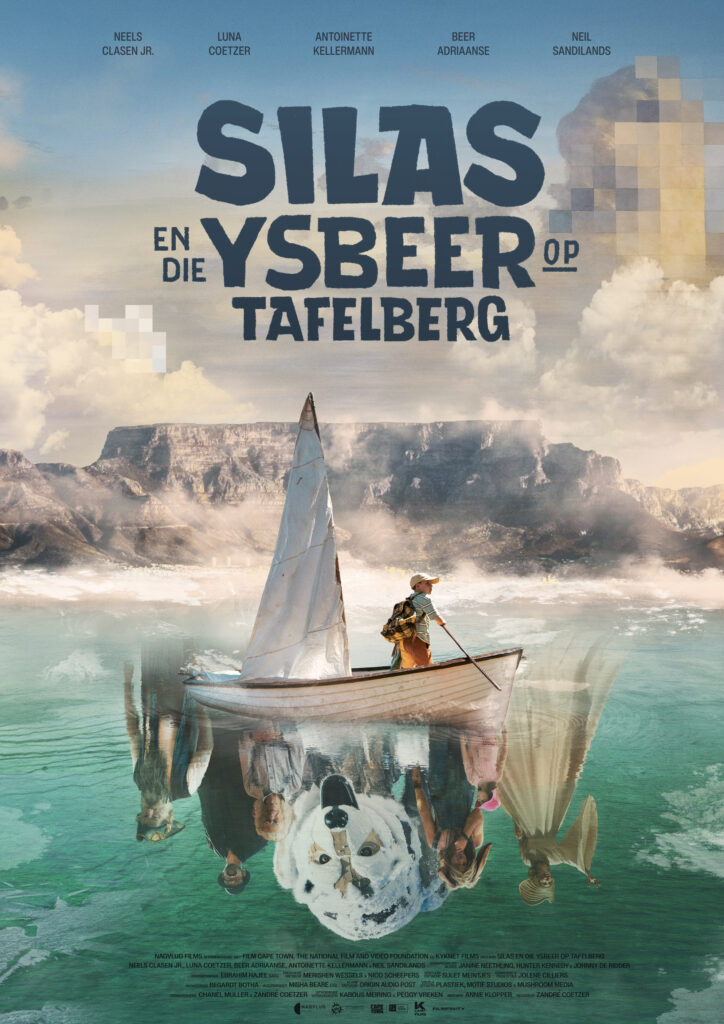
Silas en die Ysbeer op Tafelberg, a recipient of the City of Cape Town’s second Film Fund call, is gearing up to premiere at the Silwerskerm Festival. Produced by Nagvlug, the feature follows a young boy navigating a childhood shaped by both wonder and grief. After losing his grandmother, Silas embarks on a journey to find her in Droomland, a magical dream world where imagination and reality collide. Filmed in Cape Town, the film combines fantasy and adventure with an emotional exploration of loss, imagination and healing, all against the unmistakable backdrop of Table Mountain.
For Executive Producer Kabous Meiring, getting the film to the big screen is a testament to the determination of everyone involved.
“This project is the epitome of grit, vision, and one hell of a hardkoppige collective.”
For Meiring, the significance of Silas en die Ysbeer op Tafelberg stretches beyond entertainment. The film, he says, is also a reflection of what can be achieved by a determined local creative team.
“It is a creative venture that leaves behind more than a story; it instils confidence in an industry navigating uncertain times.”
That sense of determination runs throughout the production. Silas en die Ysbeer op Tafelberg is an example of what can happen when a big creative vision is matched with commitment and collaboration.
As Meiring puts it: “That is Silas for you: more than just a film.”
A story about loss, told through imagination
Without giving too much away, composer Johnny de Ridder describes Silas as a touching exploration of how children process difficult emotions.
“Audiences can expect a heartfelt story about a boy who uses his own dreams to help him deal with loss and big feelings in real life.”
While the film embraces fantasy, its emotional core is something audiences can easily connect with. Themes of grief, healing and self-discovery are woven into a world filled with colourful characters, humour and a healthy dose of imagination. The film’s visual and musical elements also play an important role in bringing that world to life.
“The set design is beautiful, and the sound design and music really pull you into the world.”
For Johnny, Silas en die Ysbeer op Tafelberg is also a film made to be experienced together in a cinema.
“It’s the kind of film that benefits from the big screen. The visuals, the music, and the overall atmosphere feel much more immersive when you’re sitting in a cinema with an audience,” said Johnny
Behind the fantasy is a production that required plenty of practical creativity. According to Production Accountant Martin J Hutton, support from the City of Cape Town’s Film Fund helped the team take an ambitious idea from the page to the screen.
“Taking a concept as visually ambitious as Silas en die Ysbeer op Tafelberg from page to screen required strong backing, and receiving support from the City of Cape Town’s Film Fund was a pivotal turning point for our production.”
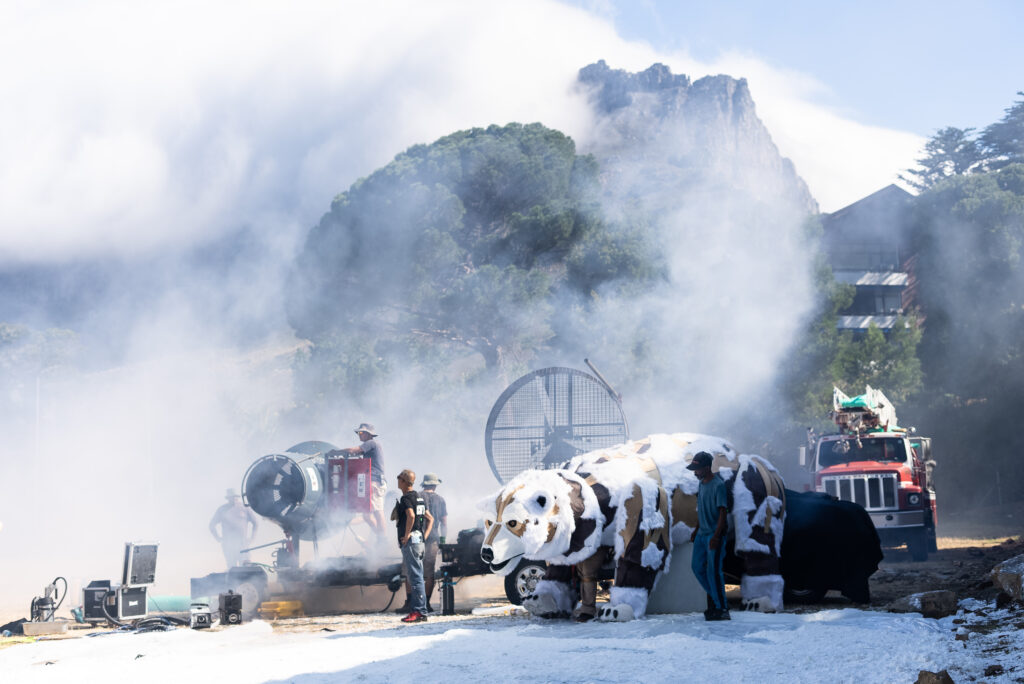
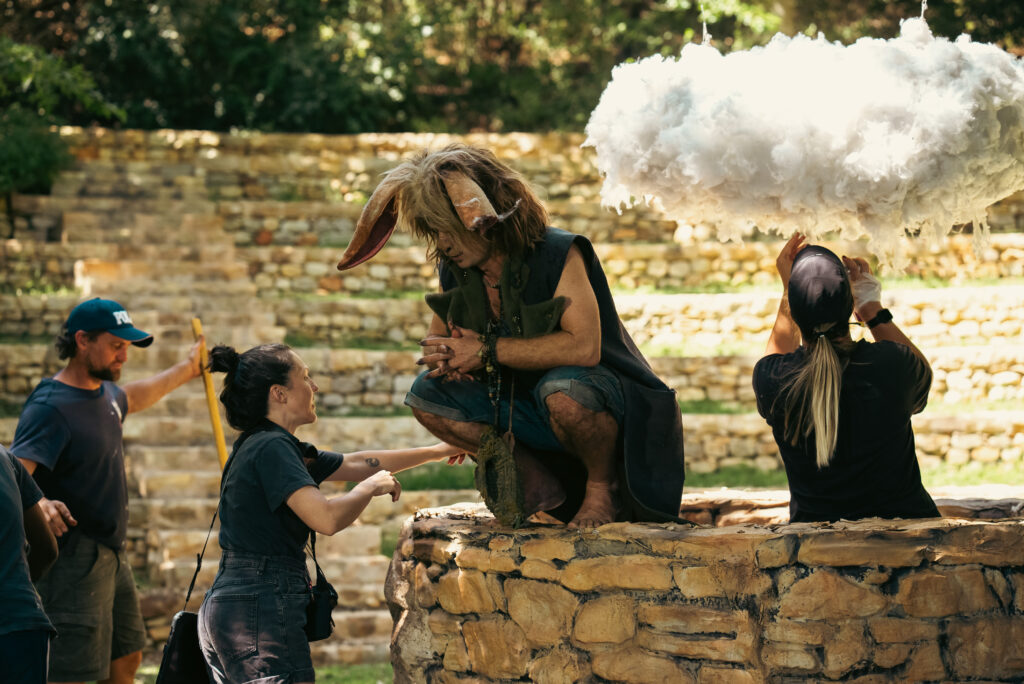
According to Hutton the funding helped provide the technical foundation for the production, including camera, lighting, sound, grip and logistical support. It also opened up creative possibilities, allowing the filmmakers to lean into practical effects and bring the fantasy world to life within Cape Town’s natural landscapes. That included creating snow on Table Mountain, constructing a custom exterior set, filming child characters flying high on a “poep wolkie”, and even bringing in frog squads for a boat scene on a dam.
“Without the City of Cape Town’s Film Fund, these high-impact visual moments simply wouldn’t have been possible at this scale, and Film Cape Town truly helped us showcase the incredible potential of our local landscapes, world-class crew, and storytelling capabilities,” said Martin
For a film with Table Mountain in its title, the mountain is naturally more than just a backdrop. For cinematographer Ebrahim Hajee, who was born in Cape Town and has more than 26 years of experience in the film industry, filming the mountain offered an opportunity to see a familiar landscape in a completely new way.
“I’ve never grown tired of filming here. I’ve shot Table Mountain countless times, each visit revealing its unique charm. With Silas, it felt like the first time, offering a fresh perspective. The mountain itself seemed like an old uncle, silently narrating its story. Even the mythical tales surrounding it influenced the film.”
Ebrahim added that filming in one of Cape Town’s busiest tourist destinations came with its own challenges and says the support of the Table Mountain Cableway and SANParks was invaluable in making the shoot possible.
Looking beyond Silas, he also sees an opportunity for Cape Town to strengthen its role in supporting local productions.
“Looking ahead, if Cape Town fully embraces local productions, showcasing its beauty, it could significantly boost the local industry and nurture emerging talent,” said Ebrahim
South African Stories
South African filmmakers are increasingly telling stories that are deeply rooted in their own experiences and communities, while finding audiences well beyond the country’s borders.
For producer Chanél Muller, Silas en die Ysbeer op Tafelberg arrives at an exciting time for South African cinema.
“The last few years have been incredibly exciting for South African cinema. We’ve seen our fellow filmmakers tell bold, deeply personal stories that have found audiences far beyond our borders, and the recognition they’ve received internationally has shown that there’s a real appetite for authentic South African voices. It’s really inspiring because every film that breaks through helps create more opportunities for the rest of the industry.”
Muller hopes Silas en die Ysbeer op Tafelberg can form part of that momentum. At its heart, the film is unmistakably South African, from its setting and language to the world it creates, while its themes remain universal.
“I hope Silas en die Ysbeer op Tafelberg finds its place within that momentum. It’s a story that’s unmistakably South African: In its setting, its language and its heart. However, at its core it’s about themes that anyone can relate to. I think that’s where our industry is at its strongest: when we stop trying to make stories that could happen anywhere and instead tell stories that could only happen here,” said Chanél
For Chanél, that is where the real opportunity lies, creating films that are rooted in South Africa while still allowing audiences around the world to recognise something of themselves in the story.
“For me, that’s the exciting part. If Silas can contribute, even in a small way, to the growing confidence in South African filmmaking and remind audiences here and abroad that our local stories have universal value, then I’ll be incredibly proud. That’s the kind of work I hope we’ll continue to make. Stories that are rooted in where we come from, but that invite people from around the world to see a part of themselves in them,” said Chanél
Perhaps fittingly for a story centred on imagination, actor Beer Adriaanse, who plays Brommel, hopes audiences leave the cinema with a renewed sense of possibility.
“I can only hope people take away the idea that Husse, and many other mythical creatures really exist, and will appear – and possibly befriend – those with open hearts who need backup or good conversation on their current adventures.”
While delivered with a touch of humour, the sentiment speaks to something at the heart of Silas en die Ysbeer op Tafelberg: the idea that imagination can help us make sense of difficult experiences, and that even in moments of loss, there is room for wonder.
As Silas en die Ysbeer op Tafelberg prepares to meet audiences for the first time at the Silwerskerm Festival, it arrives carrying more than the promise of a family adventure. It represents a celebration of Cape Town’s creative potential, the strength of local filmmaking, and the power of stories that are deeply rooted in home. And perhaps, most importantly, it reminds us that sometimes the most extraordinary journeys begin with a little imagination.