From Business to Film Sets: Inside Sheena-Lee Hendricks’ Journey
2 January 2026
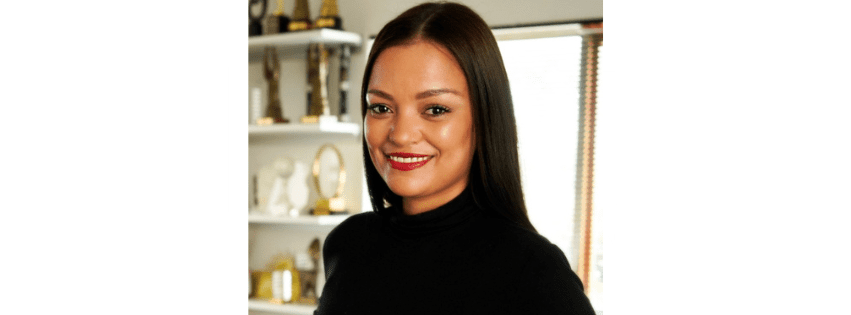
From finance to film sets, this conversation traces a decade-long journey. Starting out as a Production Accountant in 2015, Sheena-Lee Hendricks has grown into a multifaceted leader at Penguin and Paw Paw Films. Now a Producer, Director, Shareholder, and Director of Business Affairs, she brings a rare ability to bridge the creative and financial worlds of filmmaking.
In this Q&A, Sheena-Lee speaks about the key moments that shaped her career, what leadership really looks like in fast-paced, high-pressure productions, and why clear communication, teamwork, and mentorship matter. She also shares her hopes for South African storytelling, stories that stay true to who we are, connect with global audiences, and put strong female voices front and centre, along with her vision for Cape Town’s growing role on the international production stage.
Q. You began your career as a Production Accountant in 2015. What initially drew you to the film industry, and what made you choose this entry point?
I never once thought that I’d end up in the film industry, I worked in finance prior and when I applied for the Production Accounting role in 2015 I was looking for a role that would challenge me intellectually, and you only know what a role comprises of once you have the job, it’s been 10 years with Penguin and Paw Paw Films and growing with the company has been amazing and I’ve not once been bored, I am now a Producer at Penguin and Paw Paw Films and have grown with the company ever since.
Q. What key moments or decisions do you think shaped your career trajectory?
I know this may sound like a cliché, but I worked hard, dedicated myself to my work, never giving up and always giving that 150% in all that I do, if I was average I would still only be the Production Accountant but due to my work ethic and eagerness to want to know and learn more its changed the course of my career trajectory.
Q. You wear many hats, Director, Shareholder, Producer, and Director of Business Affairs. How do you balance the creative and financial sides of filmmaking?
The last 10 years has taught me that you can do it all, there really is no balance as they walk hand in hand, the creative cannot exist without the financial side and therefore I think I’m fortunate to be part of both sides and to have the insight before we start building a set “do we have the budget for that set”, so to have that knowledge is an important one and very essential for any Producer.
Q. What makes Penguin and Paw Paw Films’ approach to production and business management unique?
When we look at Productions and work we wish to get out, we don’t just think about one season, we try to think about the longevity of the project, we look at the job creation that we’re adding to the industry and see how viable this project will be going forward and of course it’s important to know what viewers want.
Q. As a Co-Producer, how do you approach collaboration with other producers and creative teams?
Transparency is key when collaborating with other producers or creatives, keeping the line of communication open with all parties ensures the production succeeds ensuring that all expectations are met is important.
Q. What qualities do you believe are essential for a successful producer in today’s film industry?
Having a good temperament to work with others, be open to receiving feedback, be prepared to work hard and know if plan A didn’t work, move on to the rest of the alphabet and explore other options.
Q. Can you share a project that challenged you the most professionally and what you learned from it?
This was our feature film “Krotoa”, I remember working through the night and stayed at the office to get all of my financial reports out to our various investors, what I learnt from this experience was that one should learn to ask for help when needed, I believe that we CAN do it all, but be open to ask for help, asking for help is not a sign of weakness and being able to lean on others will help you focus on everything else that needs to get done.
Q. What themes or narratives would you love to see more of coming out of South Africa in the next few years?
There are so many untold South African stories, I would love to have more female driven narrative stories, where we have more female leads as our protagonists. The future of film is female after all.
Q. How can South African filmmakers better balance local authenticity with global appeal?
We need to get into the rooms with global stakeholders, ask the questions “what’s the international viewer craving”, speak to distributors, go to more international film festivals, schedule those meetings. As filmmakers we need to align with our international counter parts, form relationships, and merge with co-producers to tell stories that both worlds can align with.
Q. What opportunities do you see for Cape Town to further establish itself as a major film and production hub?
Cape Town could expand on hosting more Film Festivals throughout the year, let’s open the doors to more international filmmakers, distributors, studios, etc. Let’s push for more deals to be made and more productions to be shot in Cape Town, if we get them (The International Film Community) through our doors more often they’ll end up staying.
Q. As a woman in a senior leadership role within the film industry, what challenges have you faced, and how have you navigated them?
I’ve found that people underestimate me and my capabilities, luckily, I love proving people wrong, so I end up over delivering and make it a point to cast out any doubt about who I am and what I’m here for.
Q. What does leadership mean to you, especially in high-pressure production environments?
To get in and get my hands dirty, being a leader means that your team sees you aren’t afraid to do the hard work, as well as being the pillar of strength to your team. It’s important to know that it’s the Teamwork that makes the dream work, and an effective team is a successful team.
Q. How important do you think mentorship is for emerging professionals in the film industry?
It’s very important, we need the next set of filmmakers to be bigger and better than all of us. So, to have them learning and absorbing from our current filmmakers and have those emerging professionals add their own ideas and new techniques will assist them into changing the formula and making it into their own, so they may one day too, pay it forward to the next generation.
Q. What advice would you give to someone aspiring to work in film business affairs or production management?
Do it! This industry is not for the faint hearted, so be prepared to be shot down but don’t ever give up, keep on working hard and you’ll reap the benefits.
Q. If there’s one thing or story you’d love to see on South African and Internationals screens, what would it be?
I’m going to be biased and say that I’d love to see our Skemergrond and Diepe Waters Telenovela’s being showcased on US cable. 😊