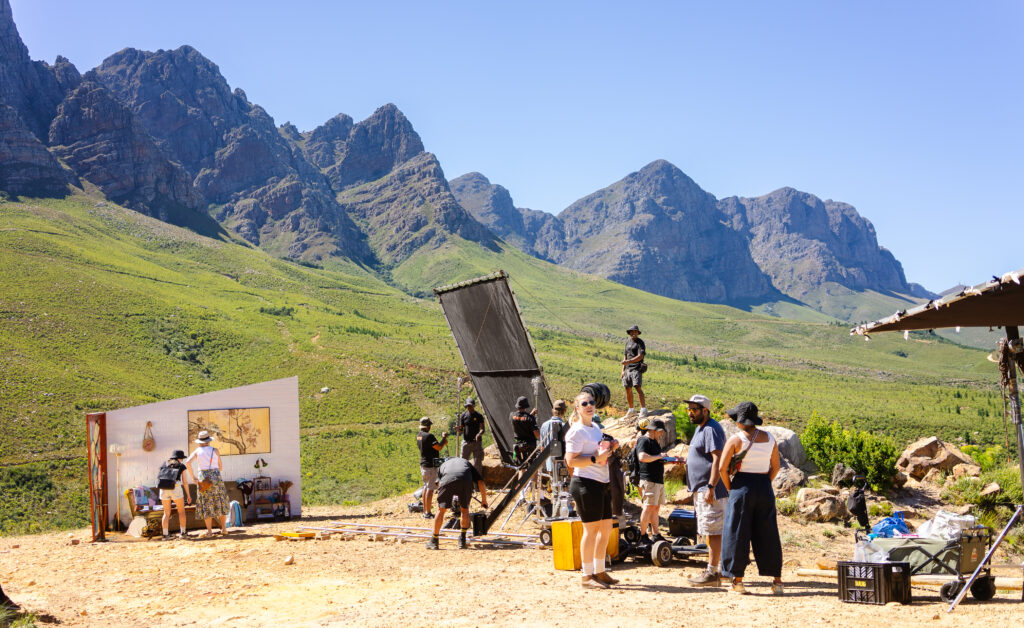
Nagvlug’s Journey in South African Film with Zandré Coetzer
31 July 2026
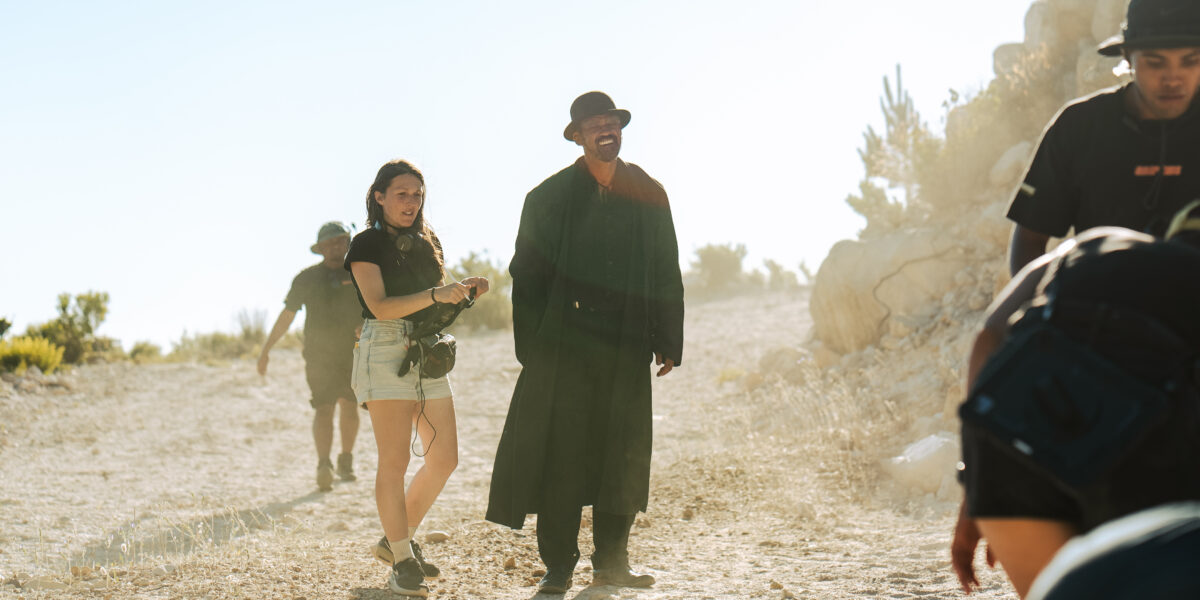
Filmmaker and producer Zandré Coetzer, co-founder of Nagvlug, believes the true measure of a film isn’t when production ends, it’s in the relationships, opportunities and impact it creates long after the credits roll.
In this edition of Feature Friday, Zandré reflects on the lessons that have shaped both her career and the production company he helped build. From the importance of collaboration and trust to creating meaningful opportunities for filmmakers, she shares her perspective on Cape Town’s growing reputation as a global filmmaking destination, the untapped potential of South African stories, and the legacy she hopes Nagvlug will leave for the industry.
Q. What has been one of the most defining lessons you’ve learnt throughout your career, and how has it influenced the way you approach new opportunities?
One of the most important lessons I’ve learnt is that delivering a film isn’t the end of the journey, it’s the beginning of creating its value.
When production wraps, it’s easy to think the work is done. In reality, that’s when a completely different phase begins. Festivals, audiences, partnerships, distribution and international opportunities all continue to shape what that film ultimately becomes. I’ve learnt that a film’s value isn’t fixed on the day you deliver it. It’s something you continue to build through the relationships you nurture and the decisions you make long afterwards.
The same is true for the people who make the films. Every project is built on relationships. Relationships with your collaborators, with financiers, with broadcasters, with festival programmers, with distributors, and perhaps most importantly, with the story itself. If you don’t genuinely care about the themes you’re exploring and the people you’re exploring them with, I don’t think the work has the same depth or longevity.
That lesson has changed how I approach every opportunity. I think less about the individual project and more about the relationships it allows me to build. Films come and go, but trust, reputation and shared ambition carry forward into every project that follows. In this industry, I believe relationships are ultimately the most valuable thing you can create.
Q. What was the driving force behind founding Nagvlug, and what gap did you hope to fill in the industry?
People often ask about the moment Nagvlug was founded, but I don’t think a company is defined by the day it’s registered. That’s the easy part. The real work is what happens afterwards.
For me, Nagvlug truly became Nagvlug when Chanél and I made a conscious decision about the kind of company we wanted to build and the values we wanted to build it on. We realised that success wasn’t going to come from chasing individual projects. It would come from continually learning, adapting, refining our strategy and surrounding ourselves with people who challenged and strengthened our thinking.
At the heart of that is a simple belief: we are stronger together.
Every meaningful step forward for Nagvlug has come through collaboration. None of our successes can be attributed to a single person or a single moment. They are the result of writers, directors, producers, crew, cast, financiers, broadcasters and partners all bringing different perspectives to the same table. Our role is often less about having all the answers than it is about recognising good ideas, creating an environment where they can grow, and stewarding them towards something greater than any one person could have achieved alone.
I think that’s the gap we’ve always tried to fill. Not simply making films, but building a company where collaboration is the strategy, not just the process. Where people are empowered to contribute, to challenge each other and to keep evolving. Because the best stories, much like the best companies, are rarely the product of a single voice.
Q. The name Nagvlug is distinctive. Is there a story behind it, and how does it reflect the company’s philosophy and approach to filmmaking?
That’s such an interesting question because, in all honesty, it’s one I’ve only really started reflecting on recently.
Sometimes I’ve found that something can be right in front of you for years before you truly see it. Nagvlug has always been the name of our company, but your question made me stop and ask myself what it actually means to me today.
I realised that, to me, Nagvlug has become a toevlug (refuge).
A place where ideas can find shelter long enough to grow into something meaningful. A place where filmmakers, writers, directors, cast and crew can feel supported, challenged and encouraged to do the best work of their careers. A place where people are trusted, where collaboration is valued, and where stories are given the time and care they deserve.
There’s also something beautiful about the image of light in the darkness. Not a bright spotlight, but enough light to help you find your way forward. I think filmmaking often feels like that. Every project begins with uncertainty. You don’t always know exactly where you’re going, but together you keep taking the next step until a story slowly reveals itself.
If that’s what Nagvlug can be for the people we work with, a safe place to create, to experiment, to learn and to grow, then I think the name has become far more meaningful than I ever realised when we first chose it.
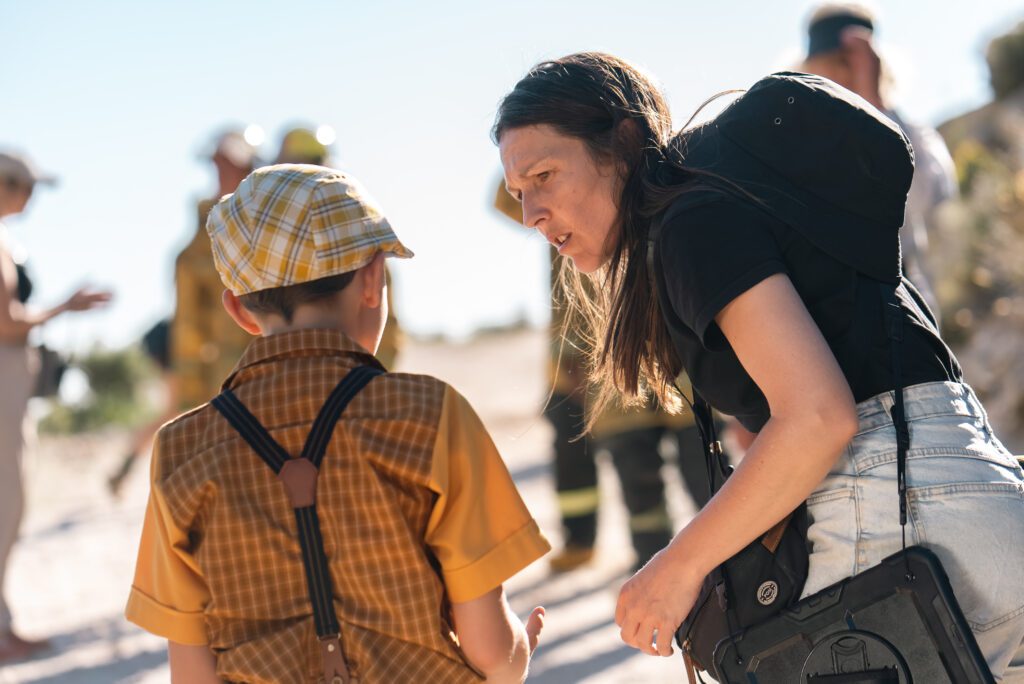
Q. As a woman leading a successful production company, what advice would you give to the next generation of women looking to build careers in film, whether behind the camera or in leadership roles?
I’m incredibly grateful for the opportunities I’ve had, but I don’t think the best advice I can give changes depending on whether you’re a woman or a man.
Anyone who dreams of building a career in film should remember what a privilege it is to wake up every day and spend your life telling stories. It’s easy to lose sight of that when you’re facing long hours, uncertainty or rejection, but the truth is that many people never get the opportunity to do work they genuinely love.
The ability to build a career doing what you’re passionate about comes with sacrifice. There will be setbacks, projects that don’t happen, funding that falls through and moments where you question whether it’s all worth it. But if you remain committed to learning, keep showing up and continue treating people well, those experiences become part of the journey rather than the reason to stop.
I’ve also learnt that this industry is far less about proving yourself than it is about building trust. Your reputation, your generosity, your willingness to collaborate and the way you treat people will often open more doors than your talent alone.
So my advice is simple: stay curious, keep learning, work hard, be kind, and never lose sight of why you fell in love with storytelling in the first place. If you can hold onto that, you’ll build more than a career. You’ll build a life doing something you truly care about.
Q. From your perspective, what continues to make the city such an attractive destination for filmmakers, and where do you see untapped potential?
Cape Town is an extraordinary place to make films, and not only because of its landscapes. We have world-class crews, exceptional technicians and creatives who continue to prove themselves on productions from all over the world. There’s a level of craftsmanship here that deserves far more international recognition than it often receives.
What excites me even more, though, is the city’s growing confidence in telling its own stories.
For a long time, Cape Town was known primarily as a destination where international productions came to shoot. While that remains incredibly important, I think there’s enormous untapped potential in continuing to develop original South African stories that can travel internationally. The world isn’t looking for us to imitate someone else’s voice. It’s looking for stories that could only have come from here.
Cape Town is uniquely positioned to become both a production hub and a creative hub. We have remarkable writers, directors, actors and producers, but we also have stories shaped by a history, geography and cultural diversity that simply don’t exist anywhere else.
For me, that’s the real opportunity. Not just bringing productions to Cape Town, but exporting Cape Town’s imagination to the rest of the world.
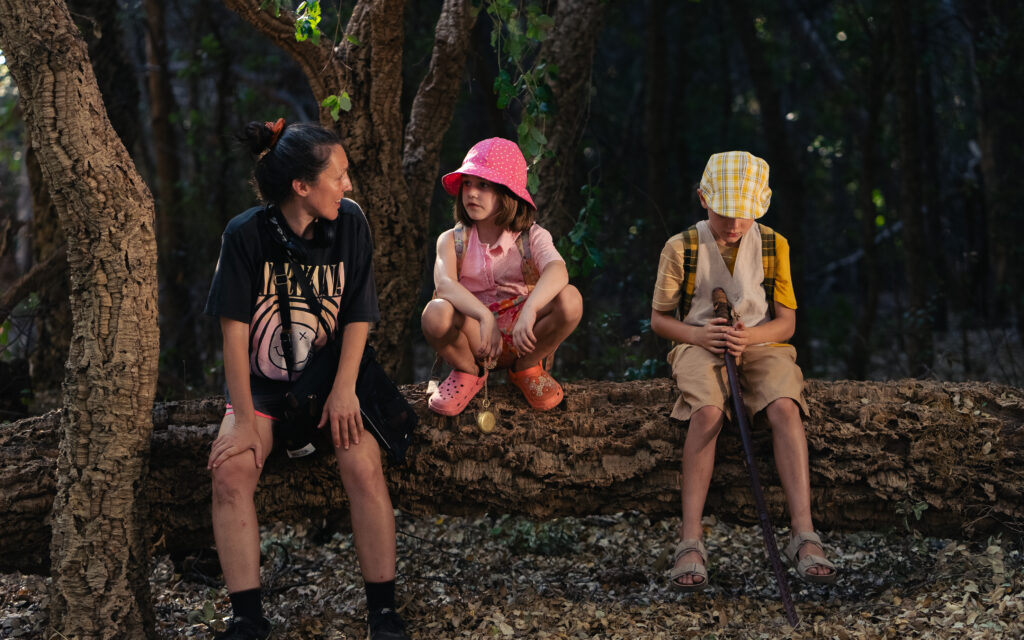
Q. What have you learnt about collaboration through co-leading Nagvlug, and how has it shaped the work you produce?
Co-leading Nagvlug has taught me that collaboration isn’t about finding someone who thinks like you. It’s about finding someone who makes your thinking better.
Chanél has been that person for me. She’s my double-check, my lantern in the dark. She has a remarkable ability to ask the question I hadn’t considered, to challenge my assumptions, to celebrate the wins and to keep me grounded when I need it most. I’d like to think I do the same for her. We’re both deeply invested in making the work, and each other, better.
The biggest lesson I’ve learnt is that trust isn’t built through always being right. It’s built through vulnerability. Through being able to say, “I don’t know.” Through apologising when you’ve made a mistake. Through having the discipline to show up every day, and the commitment to tell each other the truth, even when it’s uncomfortable to hear.
I also think alignment is often misunderstood. It’s not about agreeing on everything. In fact, some of our best conversations begin with disagreement. What’s important is taking the time to understand why you disagree. Once you’ve unpacked that, you can move forward with confidence, whether you’re making decisions together or working independently.
That philosophy extends far beyond the two of us. It’s shaped the culture we’ve tried to build at Nagvlug, where ideas are tested, not protected, and where the goal is never to win an argument but to make the work stronger.
Q. What changes have you witnessed over the years, and what opportunities do you think emerging filmmakers should be paying attention to?
The biggest shift I’ve witnessed is that filmmaking has become far more accessible. The tools to write, shoot, edit and distribute stories are now within reach of more people than ever before, and that’s incredibly exciting.
At the same time, I think we’ve unintentionally drifted towards a culture of trying to do everything ourselves. We’ve become fascinated by the idea of the one-person filmmaker or the one-stop shop. While those skills are valuable, I don’t believe they’re where the real magic of filmmaking lies.
Film has always been, and will always be, a collaborative art form.
The projects that stay with us are rarely the product of one person’s brilliance. They’re the result of people bringing different skills, different experiences and different ways of thinking to the same story. That’s where ideas are challenged, refined and ultimately become stronger.
So if I could encourage emerging filmmakers to pay attention to one thing, it would be this: build your community. Find people whose strengths are different from your own. Invest in those relationships. Learn to trust, to listen and to collaborate generously.
The technology will continue to evolve. The platforms will change. But the ability to build meaningful creative partnerships will always be one of the greatest advantages a filmmaker can have.
Q. What is one aspect of producing that audiences rarely appreciate but is essential to bringing a story to life?
The honest answer? The finance plan… and the final audit! They’re probably the least glamorous parts of filmmaking, but they’re absolutely essential.
People often think a finance plan is simply a template you fill in. It isn’t. It’s a business strategy. The amount of thinking that goes into it is enormous because you’re not only figuring out how to finance a film, you’re designing the entire lifecycle of that project. From development and production through post-production, distribution and sales, every decision has a knock-on effect somewhere else.
And then you still have to bring that plan into existence.
This is where collaboration becomes essential. At Nagvlug, the finance plan goes through more iterations than I can count between myself, Chanél and Martin. Each of us brings a different perspective, constantly challenging assumptions and stress-testing the strategy until we’re confident we’ve considered every stage of the journey.
Martin, in particular, is our closer. He’s our anchor and our fail-safe. While the rest of us are already dreaming about the next story, he’s the one who carefully shepherds the project through its final audit, making sure every detail has been accounted for. I’m incredibly grateful for that because it’s a reminder that the strongest teams aren’t made up of people who can all do the same thing. They’re made up of people who know their strengths, acknowledge their weaknesses and trust each other to carry different parts of the load.
When a film works, the audience should never notice any of this. They should simply become immersed in the story. But behind every film is a team of people making thousands of thoughtful decisions, many of which have nothing to do with cameras, and everything to do with giving that story the best possible chance to succeed.
Q. What kind of legacy do you hope Nagvlug leaves, not only through the films it creates, but through the impact it has on the people and industry around it?
More than anything, I hope Nagvlug leaves behind people who are better for having worked with us.
Of course I hope we’ve made films that endure, but films eventually become part of history. People carry their experiences with them for the rest of their careers.
One thing we’ve always felt strongly about is that no one should simply be a number on a call sheet. Every person on set, regardless of their role, is a collaborator. Every contribution matters. We trust our crew, we respect them and we believe people do their best work when they’re treated with dignity.
That also means creating healthy working environments. We fiercely protect our crew because making a film should never come at the expense of the people making it. Long hours are sometimes unavoidable, but they should never become a badge of honour. We want people to go home proud of the work they’ve done and still have something left of themselves for the people waiting for them at home.
The same philosophy extends beyond our sets. I hope we’re remembered as a company that shared knowledge, gave opportunities, celebrated other people’s successes and understood that a healthy industry is built by healthy companies that care for healthy people.
If someone leaves a Nagvlug production feeling more confident, more valued, more capable and more excited about the future than when they arrived, I think that’s a legacy worth striving for. The films are important, but they’re never more important than the people who make them.
Q. Looking ahead, what is the one story you still dream of bringing to life, and why is it the one that has stayed with you?
There’s one story that’s stayed with me for years. I won’t say too much about it because I still hope to bring it to the screen one day, but it’s an eight-part science-fiction mystery set in a small Karoo town.
What has kept me returning to it isn’t the science fiction. It’s the question at its heart:
What if the next great scientific leap isn’t something we have yet to discover, but something we’ve forgotten?
I love stories that begin with an intimate human mystery and slowly unfold into something much bigger. I’m fascinated by ancient knowledge systems and the idea that the people who walked this earth long before us may have understood things we’ve since forgotten. There’s so much we can still learn from them. Stories like these invite audiences to question the way they see the world without ever losing sight of the people at their centre.
This particular story weaves together forgotten knowledge systems, language, science and memory into a slow-burning investigation that gradually reveals a truth that has been hiding in plain sight all along. It’s ambitious, unsettling and, I hope, deeply human.
Perhaps that’s why it has stayed with me for so long. The older I get, the less interested I become in stories that simply provide answers. I’m far more interested in stories that ask questions worth living with. Those are the stories that continue to evolve long after the credits roll.