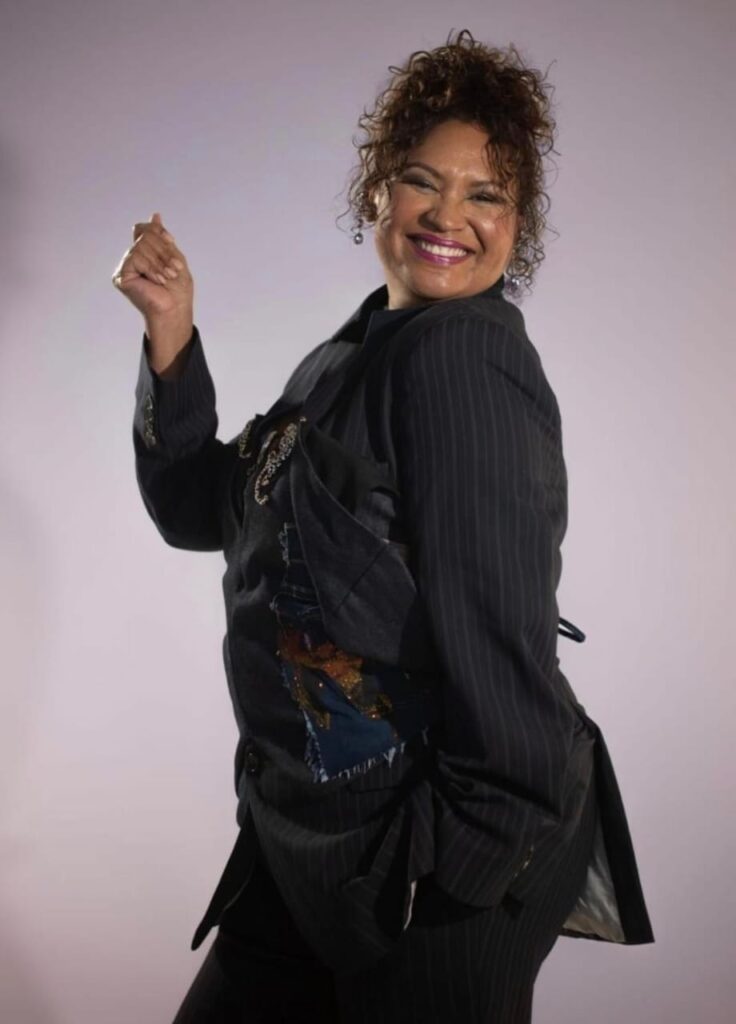
Jill Levenberg, a career shaped by story, stage and screen
19 December 2025

Jill Levenberg is one of South Africa’s most dynamic and versatile actresses, widely known for her iconic role as Mymoena Samsodien in Suidooster. With a rich career spanning film, television, and theatre, Jill has captivated audiences through her powerful performances and authentic storytelling. Renowned for her depth, range, and dedication to her craft, she has become a beloved figure in the local and international entertainment scene.
Join us as we dive into her journey, inspirations, and the stories behind some of her most memorable roles.
Q. What first inspired you to pursue acting professionally?
I was always a bit of a performer, you know. From when I was a child, I was always acting, making little shows for my parents, and preparing concerts at home. I would get home and imitate the pastor at the church I had just seen. Always clowning around, singing and performing seem to come naturally. When I was in primary school, I played Nancy in the musical Oliver. We had a teacher, Gerry Henricks, who wrote a little play when I was in standard 4, and I had a lead role in that play.
I loved singing in the choir, loved performance in general and then in high school, I was part of the music active program, which allowed us to then perform on the Baxter stage, and that experience is what started the magic. If the fire was already burning inside me as a kid, then that is what ignited the blaze. It was the fact that I could perform on the Baxter stage, a real stage in a real theatre with lights, and that feeling was indescribable; it felt like pure magic and such fun, and it stayed with me. I then knew that this was what I wanted to do. When I got closer to matric, there were other considerations, industrial psychology or criminology, but there was no money to study. I travelled, I worked and saved the money and travelled as an au pair, which was the cheapest way to travel abroad to America and Germany. In Germany, I stayed in an artist colony in Munich, where I also performed in bands, poetry open mics, and then I made up my mind to come home and study and try to get into UCT, and I was offered a bursary to study drama.
Q. Are there any roles or projects that were particularly meaningful to you?
Every role offers a gift, even when a character is challenging. As an actor, you can’t judge the character; you have to fully become them. Each genre also brings its own discipline. Television, theatre, and film require different skills and strengths, and each contributes differently to an actor’s growth.
There’s a saying that television makes you rich, film makes you famous, and theatre makes you good, though that doesn’t always apply in South Africa. Still, it highlights how each medium offers something unique.
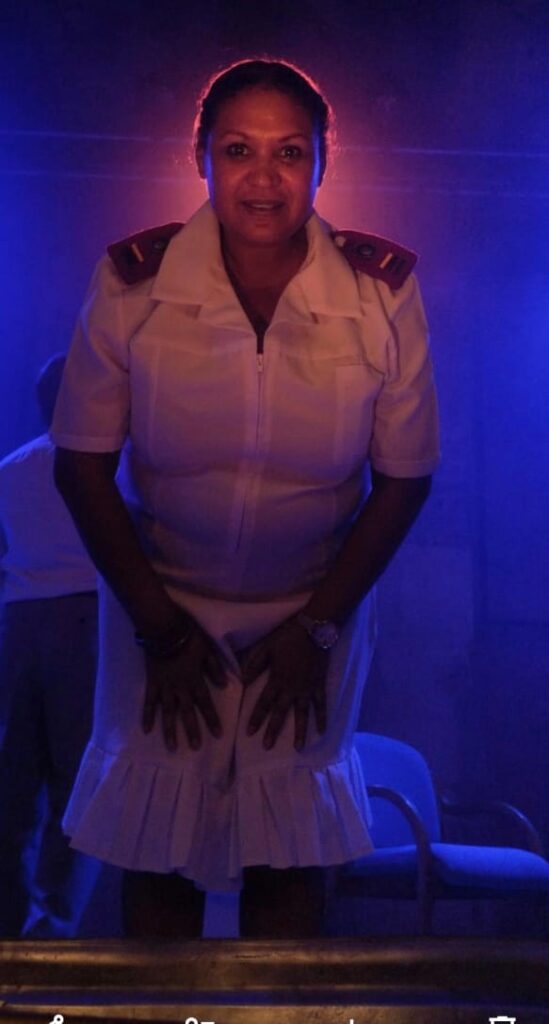
Certain roles stand out in my career, especially Ellen Pakkies, which was an iconic and deeply meaningful journey. In my first film, Abraham, directed by Jans Rotenbach, I played Beulah; it was another formative experience, filmed on location over six weeks. A Christmas Chorus, now on Showmax, was a particularly special project and the final production under the Fugard Theatre.
Other highlights include the film Uitvlucht, which required living on location, as well as a decade-long role as Mymoena, the first Muslim matriarch on a South African soapie who broke boundaries, and, more recently, the short film Vultures, directed by Dian Weys, has gained great acclaim internationally winning the best short film award at festivals in Canne, Bulgaria and Philadelphia.
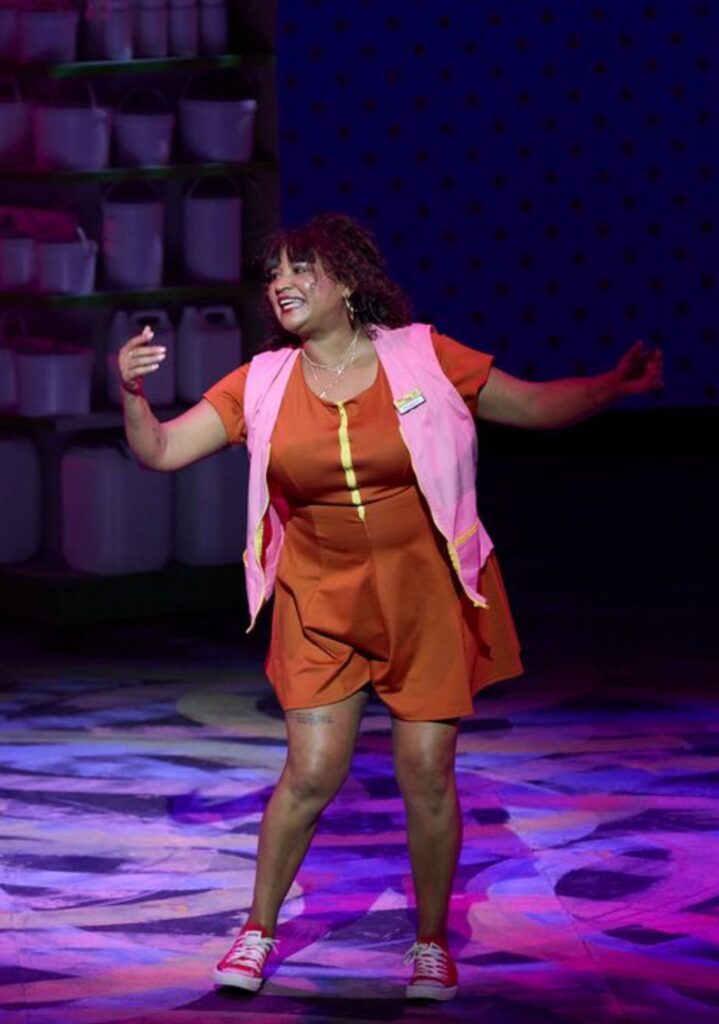
In theatre, several roles stand out. Most recently, I am playing Bronwyn in Colleen the Musical alongside Marc Lottering, a character that had been imagined for many years and which I now have the opportunity to bring to life. I also portrayed Lucy Moten in David Kramer’s musical Orpheus in Africa, a role that won a Fleur Du Cap for Best Supporting Actress. Another major highlight was playing Diana, the slave from Madagascar, in Droomwerk, written by Pieter Oordendal and directed by Kanya Viljoen, which earned me a Woordfees Trophy.
Other notable theatre work includes a two-hander with Elton Landrew, in Gas by Gerald Cloete, as well as Queenie Hulle, directed by Christo Davids, for which I received a Fiesta nomination, and which won Best Production at the Aardklop Festival.
In television, a major highlight was the series White Lies, where I played gun-wielding gangster opposite Natalie Dormer, which was another significant milestone in my career.
Q. What’s a funny, unexpected, or memorable behind-the-scenes story from one of your films or tv series?
I remember when we shot in Lavender Hill, and we were filming the Ellen Pakkies story. There were always kids and people standing around watching us film. When the AD would shout, “Silence on set” or “Quiet on set,” you would hear the rest of the kids and everybody else also shouting, “Silence on set.”
If anybody wasn’t quiet or silent, the kids would all start shouting, “Silence on set.”
Yeah, so that was always funny.
Something that always happens at Suidooster is with the Samsodiens. When Cedwyn was still on set, and even now that he isn’t on set anymore, we still laugh. Between Jawa, Jawahier Petersen, Irshad Alie, and Simon Biscombe, we are the Samsodiens, and between the four of us, we are always, always laughing. Like, laughing ridiculously, you know…It’s really lovely to work like that.
And that’s also why I love doing theatre and musicals, because, for example, this cast now with Mark Lottering and everybody that’s in this particular cast, we’re always cracking jokes and laughing, and it’s just wonderful.
When the girls are getting ready for the show, and we’re in our dressing rooms, because it’s girls and boys in different dressing rooms, we sing, we play music, and we laugh. You know, you become a family, essentially.
If you’re working on something and you’re spending two months together, every single day, you become a family.
I also remember doing Ellen Pakies. I’d hired a tiny little separate entrance near the beach, and I invited Elton Landrew and Jared Geduld to my place, because they played my husband and son. I invited them to come and stay over so we could get acquainted and build a family dynamic, you know.
They came, we stayed over, we broke bread together, and we got to know each other a bit better because we were going to be playing a family, and it was such an important story.
And the crew that you work with and the people in production, you always become a bit of a family, you know?
Another fond memory is working on the film Assblief en Dankie. It was a short film and something very memorable. I was playing opposite Crystal Donna Roberts, and I will never forget the time that we shared together.
Q. What do you love most about being part of the film industry?
It’s getting to tell stories that change lives, that make people happy or move them to tears, maybe spark a cathartic reaction in them, maybe inspire them or just entertain them.
You know, it’s being part of this wonderful landscape of talented people that we’ve got in South Africa, who are making waves and who are incredibly talented. Access is improving.
And, you know, you get to see incredible South African work on Netflix, and it’s like playing fields are almost levelling out now. And internationally, more and more people have been able to see what we’re made of here in this country.
Q. What do you look for in a script or character before saying yes to a role?
Before saying yes to a role, I look to see whether the character is similar to anything I’ve played before, and if so, then I usually want to go for something that I know is going to challenge me in a different way or bring something different out of me.
I love transforming, and I like character work, and so I look for obviously something, you know, that brings something else, something different out of me.
Q. If you could take on any role, past, present, or fictional, what would it be and why?
There are so many, how does one narrow it down? I’d definitely like to play in a period piece, similar to Bridgerton, you know. I definitely would like to play in something like that. Also, I’d like to play a criminal, A hard assed criminal, a criminal/gangster. Someone who is all about destruction and is a criminal mastermind, you know, and I’d also just like to play the lead in a romantic love story.
Q. What has been your biggest acting challenge so far, and how did you grow from it?
I was part of a project a couple of years ago where I had to work with someone who belittled me, patronised me, was extremely condescending, excluded me blatantly, made it very obvious, and wanted to make me feel like an outsider. Kind of setting up a camp that there was the rest of the cast, and then me.
This was years ago, before I had done anything major, you know, before my name was really out there, and it was incredibly difficult because we worked together for many, many months.
We had to tour together, and during that time, the person, whom I’d previously been friends with, became very unkind and would often ignore me. Other cast members noticed, but no one spoke up because that person was in a position of power.
I remember dreading going to work and performing on that project. I had to learn to make myself strong, and I leaned heavily on my faith to get through it. I was relieved when it ended, but the experience stayed with me for a long time. I struggled to understand how someone could be so mean.
Ultimately, it taught me grace, forgiveness, and resilience. I learned to build emotional defences, focus on the work, and not waste energy on things that don’t deserve it. Years later, when I encountered the person again, I chose grace.
What I learned is that nothing internal in a team can be bigger than the work itself. Because the work is so people-focused, with different personalities, energies, and baggage, I had to learn to put the work first while still being kind, generous, and emotionally agile. That meant learning to process emotions quickly and build resilience. I’ve done a lot of personal work, therapy, anxiety-management techniques, staying physically healthy, and attending Vipassana retreats, which taught me meditation practices that help me deflect negativity and return my focus to what matters most: the work.
Q. Is there a role that changed you personally or professionally?
I would say Ellen Pakkies definitely made a lot of changes professionally by putting me on the map.
I didn’t know the producers were attending an awards ceremony. They called me one evening from the festival to tell me I’d just won an award in Italy, and later they brought it home for me. I had no idea they were even going to that festival.
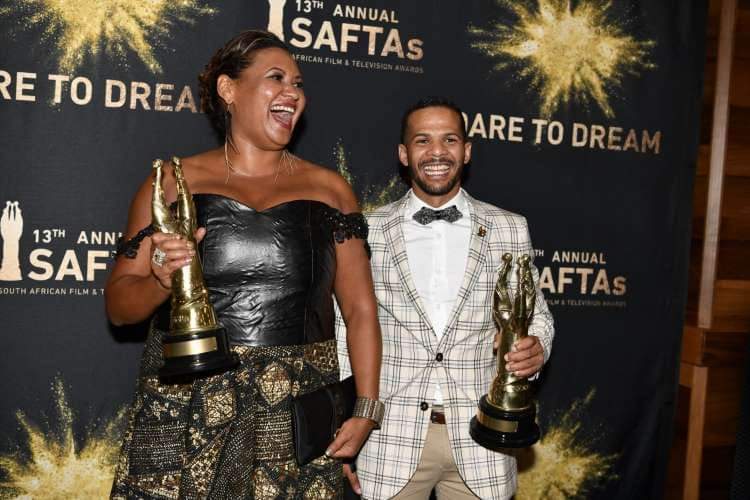
And then I also won a Silverskermfees Award for Best Actress in a Feature Film for Ellen Pakkies. I also got nominated for the African Academy Awards, a nomination for Best Actress for that role. So that role really expanded my professional portfolio considerably.
Mymoenah, definitely, together with Ellen, is what kind of made me a little famous.
The soapie has been running for 10 years, and it’s created a huge fan base. But I do think that with every role you change and grow a little bit. Every role comes to teach you something about yourself, comes to change something in you, comes to grow you a little bit.
Q. What do you feel the industry is doing well, and where do you think it can grow?
We’re putting out really good content, we’re producing really good stuff and improving all the time. Where I feel the industry can grow is with regard to policy and law in this country; actors still do not own their own image and have been fighting for years, and policies have not been changed for years with regard to actors. The fact that content can be repeated without compensation or remuneration needs to change.
This is one of the main reasons why some actors end up paupers in this country, because, in other countries, repeat fees are what help actors with their pensions or help them in their retirement.
Here in our country, we don’t have that, and that memorandum has been on Cyril’s desk for years. Actors are suffering. We don’t have laws that protect us. Artists are not protected or looked after in this country, and some are still not paid properly.
Some producers end up sometimes not even paying, and some artists get really raw deals. All of that needs to change. And that is a law that needs to be changed in South Africa.
Q. How do you feel audiences are responding to local films today?
Audiences who dismiss local content without taking the time to watch it remain uninformed about the quality of work being produced. By not exposing themselves to it, they simply don’t know what they’re missing, and that’s their loss.
Our work has long been on par with, and often surpasses, international standards. I don’t engage with that mindset because it reflects a lack of understanding. The industry has grown exponentially, and our productions are now internationally recognised. To say you don’t watch local content ignores the fact that local work became international a long time ago.
Q. What kinds of stories do you think South Africa still needs to tell on screen?
Every untold story
Q. Are you working on or dreaming up any projects behind the camera?
I’m still dreaming up a one-woman show.
Q. How do you see your career evolving in the next few years?
I can only hope that exciting projects continue to come my way and that I’m lucky enough to continue to be able to work with wonderful creatives, making magic together. I wish to continue to contribute to people’s lives by telling meaningful stories with every ounce of my being, and I get to revel in delicious, juicy parts which are gorgeously written.