Composing the Magic in Movies with Kyle Shepherd
20 February 2026
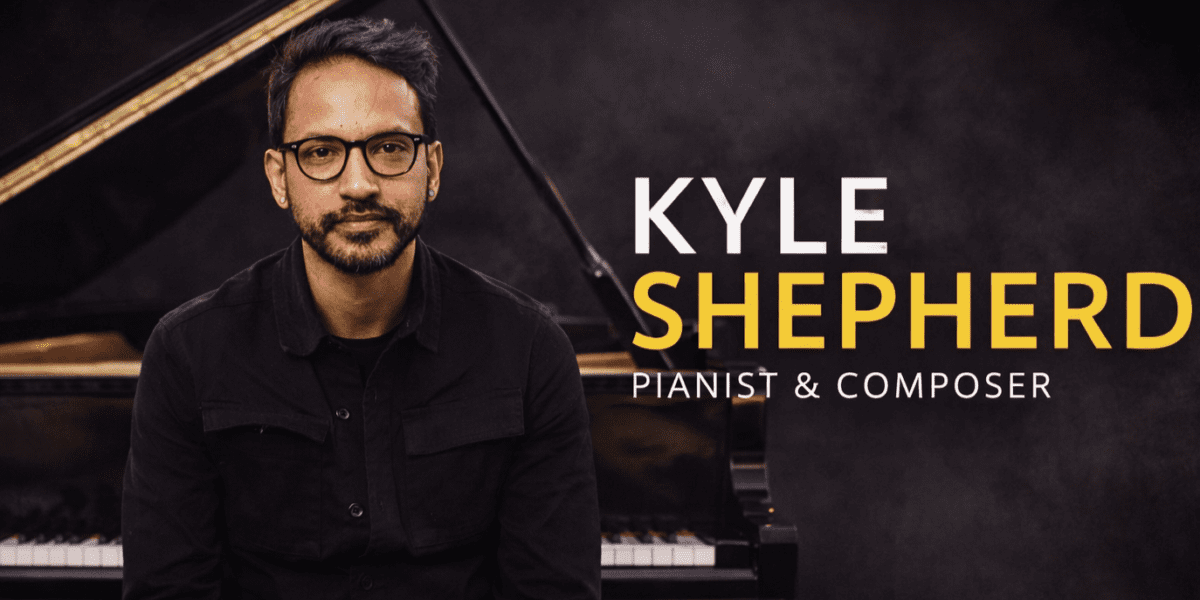
Kyle Shepherd is one of South Africa’s most celebrated pianists and composers, known for a distinctive sound that moves effortlessly across genres. Born in Cape Town in 1987, his musical journey began in his teenage years, shaped by the rich jazz traditions and uniquely South African influences that surrounded him. Immersed in music from an early age, Shepherd was inspired by the sounds he encountered at Abdullah Ibrahim’s M7 Music School, where his mother, Michele Shepherd, worked as a teacher and administrator
Kyle has earned numerous accolades throughout his career, including the release of eight acclaimed jazz albums. In addition to his work as a recording artist, he has composed for a wide range of television series, short films and long form films, scoring music for popular Netflix productions and receiving multiple awards for his outstanding contributions to television and film.
Q. You’re known for moving fluidly between jazz performance, composition and film scoring. How did your journey begin, and when did you realise that storytelling through music would become central to your work?
My first score was Noem My Skollie around 10 years ago. Before that I didn’t really consider film scoring as an option. The director, which at first was Aryan Kaganof, had known my jazz work and heard something in it that was cinematic and narrative. The director that came on board after, Daryne Joshua, decided to stick with me on the project and it just grew from there. I also have a background in classical music having learned the violin from about 5 years old, so film scoring has always felt natural to me.
Jazz music gives you a basis from which to compose in many different styles of music and contemporary/minimal classical music is always at the centre sound of modern film scoring. So it’s been a fortunate combination of my musical upbringing that has helped my career as a film composer.
Q. Jazz is such a strong foundation in your musical language. How does your background as a jazz pianist influence the way you approach composing for film and visual media?
The advantage of my background in Jazz music is that it has given me the adaptability to function well in many different genres. In Jazz we improvise and it’s a requirement to be able to adapt to what the other musicians are doing in the music, unedited and in real time. Film is a slowed down version of the same process. With picture edits and many changes in emotions from the beginning to end of a film.

Q. When you’re scoring a film, what do you respond to first, the story, the characters, or the emotional rhythm of the edit?
It definitely is a combination of all of these things but I would say the overarching emotion of the film is most evocative for me. Many conversations happen with the director until we arrive at a sound.
Q. Can you take us inside your creative process when composing a score? From the first brief to the final mix, what does that journey usually look like for you?
After the initial conversations with the director I then move to experimenting with ideas in my studio. I will write as many sketches as I can in the usually limited time given and hope that somewhere in there is
the sound of the film, the world we’re trying to create. Then from these sketches we will extract various themes. Character themes, emotional themes, action themes etc. Then once I receive the actual picture edits the process is about creating various iterations of the themes and finding their place with the picture. It’s a process of constant editing and reworking and improving the score until the very end when it’s time to deliver it to the mix. It’s a beautiful collaboration between composer, director, film editor, producers etc. We’re on the same team trying to reach the same goal: to make the best film or series that we possibly can.
Q. As both an arranger and composer, how do you balance structure and freedom, especially when working across different ensembles or orchestral palettes?
The beauty of jazz is that freedom within structure is at the core of the entire genre. A bit like life… it’s important to know the rules but make something of your own out of them. Film music is a lot more dependent on the structure of what we see on the screen. But the job still requires the same inspired creativity as you’d see in a good jazz musician on stage.
Q. You’ve collaborated with an incredible range of artists and filmmakers. How does
collaboration and conversation shape the final sound of a score or composition?
It goes back to adaptability and openness. I’m not a “my way or the high way” type of person firstly, or artist either. It’s a joy to make space within the music for my collaborators to offer their sound and I expect the same from them. Collaboration really is about respecting what each person brings to the music… Their sound. Same for collaborations in film and theatre as well.
Q. Film music often needs to serve the story without overpowering it. How do you know when a score is doing enough, and when it’s doing too much?
I had to learn that when I’m writing for a film that it’s not “my” music in the same way as it is for my solo artist music. Film music is about the story. It becomes another character in the film. It often has to be the emotional scaffolding of the film without overpowering the on screen performances. As Hans Zimmer says: “Just tell the story”.

Q. Are there any projects or scores in your career that marked a turning point for you creatively, or pushed you into new musical territory?
I can’t say much about it yet but the score I just completed last December was a nice challenge as it required me to write within contemporary music styles. I quite enjoyed it and was happy that I was able to work in that musical space. It will be out in the UK in March and likely on a big streaming service later this year.
Q. South African music has a rich and distinctive identity. How does place, history and cultural memory inform your compositions, even when you’re working in a global film context?
This is a great challenge too! To be yourself as a South African musician and global at the same time. I’ve done quite a few international film and series projects and I get a sense that the directors I work with abroad appreciate this balance that I’ve found. The same applies to my jazz work. It’s rooted but also global.
Q. As a songwriter and composer, how do you keep your voice authentic while still
meeting the demands of directors, producers and the industry?
I don’t really think of it much anymore. I’m rooted but very adaptable. It’s about choosing your moments.
Q. What excites you most about composing for film compared to writing standalone music or performing live?
They both excite me for different reasons. My jazz work is more “mine”, my self expression, my reflections on the world around me. My film work is 1 part of an entire production.
Q. Can you share a moment where music completely transformed a scene, where the score unlocked something unexpected in the storytelling?
There have been a few cases where my score has made the team re-edit a scene because they didn’t want to change or edit the music in any way. Always a nice feeling. Again, shows that it’s a team effort.
Q. Technology has changed the way composers work today. How have digital tools shaped your workflow, and what still remains deeply instinctual for you?
Before I did my first film score I didn’t even own a laptop. Now I have a room full of computers and instruments. It’s essentially a job where you have to be incredibly adept at using the current music technology. All my film compositions are produced in the computer as demos and only after a long approval process will the music be recorded by live musicians at which stage the director would’ve heard exactly how the music will sound with musicians.
Q. What advice would you give to young composers and musicians who want to move into film scoring but don’t know where to begin?
Young people are so accustomed to using music technology now that that’s not a problem. Second would be to learn as much music theory as you can. Know about harmony, rhythm and melody. But you’d be surprised to know that many of the world’s top film composers don’t have formal music training. The advantage of working at the computer is that you can edit any ideas until it sounds good. Everyone’s path is different… If you want it enough you’ll find a way to make the music.
Q. Finally, what’s next for you, are there any upcoming projects, collaborations or musical directions you’re excited to explore?
I’m focusing a bit more on live playing this year. I am in talks to do some writing for theatre productions this year and probably some follow on seasons of some series I’ve written for.


