The business of storytelling with Mumtaaz Mahomed Peerbhay
3 July 2026
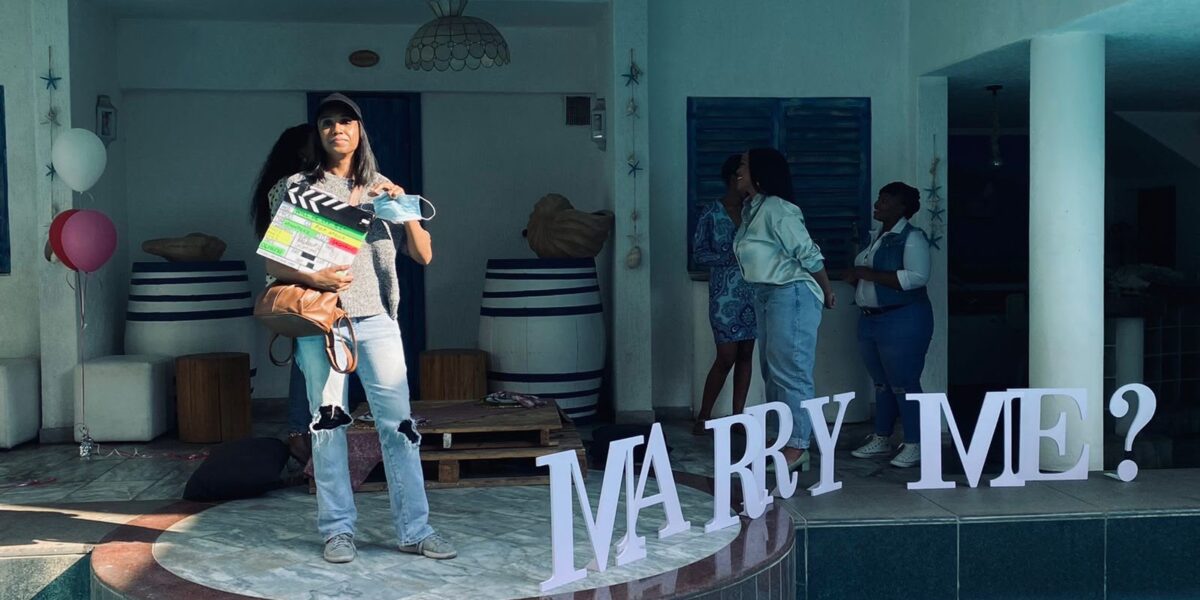
Award-winning filmmaker, producer and executive producer Mumtaaz Mahomed Peerbhay has carved out a remarkable career telling stories that resonate across genres and audiences. With credits spanning documentaries, factual entertainment, youth programming, telenovelas and drama, she has become a respected voice in South Africa’s film and television industry. In this interview, she reflects on the unexpected path that led her behind the camera, the lessons she’s learned as a producer and leader, and why authentic South African stories are finding their place on the global stage.
Q. Your career has taken you from directing documentaries to producing some of South Africa’s biggest television productions, looking back, what first sparked your passion for storytelling?
Becoming a filmmaker was never part of a carefully laid out plan. It was something I stumbled into almost by accident. Looking back, I realize that the ability and desire to create has always been an innate part of who I am. I initially pursued Engineering, largely to meet my parents’ expectations, but over time I allowed myself the space to discover who I truly was. Everything changed during a trip to the States with my aunt. While I was there, I had the opportunity to visit UCLA, where I attended several film lectures. Those experiences opened my eyes to a world I instantly connected with and that gave me the clarity to pursue what truly inspired me.
That journey led me to embrace my identity as a creative and hone my craft. When my first documentary was well received, it became the defining moment that reaffirmed my passion for filmmaking. At twenty-two years of age and two SAFTA’s to my name it wasn’t just a successful project, it was the spark that confirmed I had found the path I was meant to follow.
Q. You’ve worked across documentaries, factual entertainment, youth programming, telenovelas and drama, what have these different genres taught you as a filmmaker and producer?
Working across various genres has shown me that, at their core, the same storytelling principles apply across every genre. Whether you’re capturing real life or creating fictional worlds, it’s always about finding authentic human stories that connect with audiences emotionally.
Q. What does the role of an executive producer or line producer involve behind the scenes, and what aspects of the job do you enjoy most?
Producing in a nutshell is about managing people, expectations and money. It’s the art of balancing the creative vision with the practical realities of making a production happen. Behind the scenes, I am constantly navigating complicated situations, solving problems, and making decisions that keep the production moving forward. For me, it’s trying to stay calm under pressure, communicating effectively and never losing sight of the bigger picture. There’s something incredibly rewarding about seeing a project come together and knowing I’ve helped turn an idea into something that audiences can experience.
Q. Is there a moment in your career that tested you, but ultimately made you a stronger filmmaker.
I think every day on and off set has its own set of challenges and every person that makes it possible teaches me valuable lessons and experiences. Some moments definitely challenge me more than others but if I have to define specific moments it would be, being underestimated. Early on, I found that people often made assumptions about my abilities before seeing what I could deliver. Rather than allowing that to discourage me, I used it as motivation to let my work speak for itself. In many ways, being underestimated has become one of my greatest strengths because it has pushed me to continually exceed expectations.
You are, of course, only as good as your last production.
Q. How has South African television and filmmaking changed since you first entered the industry?
Like every industry, filmmaking continues to evolve with the times. Technology has transformed the way we create, consume, and experience stories, making many aspects of production more efficient while opening up exciting creative possibilities.
AI and modern technology have advanced the filmmaking process but this has always been a medium built on human connection, emotion, and creativity. Storytelling has been an age-old form of sharing information and shared experiences and whilst technology can enhance the way we tell stories, it can never truly replace the authenticity, collaboration and imagination that people bring to the craft. Those are the elements that resonate with audiences and will always remain at the core of filmmaking.
At the same time, South African Film and TV have become more diverse and globally visible. There is a growing appetite for authentic African stories, and local productions are increasingly finding audiences beyond our borders. While the industry still faces challenges, particularly around funding and access, I believe it is often during adversity that the greatest breakthroughs are made. South African creatives have always found innovative ways to tell compelling stories despite limited resources, and that resilience continues to shape an industry that is both distinctive and globally relevant. There has never been a more exciting time to tell stories that are deeply rooted in our own experiences while speaking to audiences around the world.
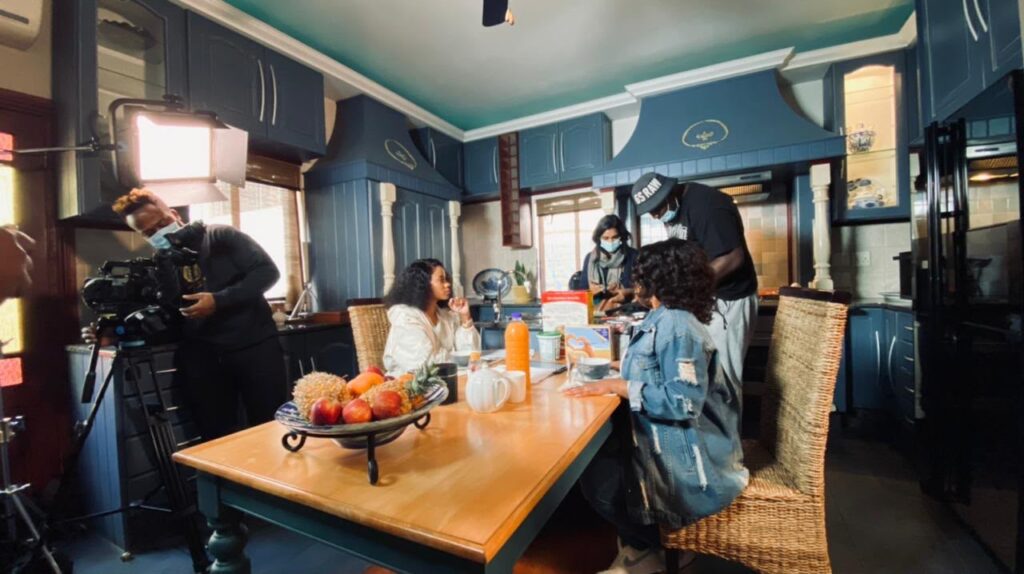
Q. From your perspective, what makes filming here so attractive for local and international productions?
South Africa specifically has unique stories and skillsets that are mostly untapped. Through my travels abroad, the one conversation that continually comes up repeatedly is that the global industry is searching for authentic, original voices and Africa is at the forefront of that conversation.
There is a growing appetite for stories that are rooted in truth and lived experiences and South Africa is uniquely positioned to tell them. We have the talent, locations and storytelling tradition to create work that resonates with audiences internationally.
Q. As someone who has also served as a SAFTA judge, what qualities stand out to you when you see exceptional storytelling or production?
The main premise of the SAFTA’s is to reward and acknowledge excellence. The qualities that stand out most are, what sets a production apart from so many others, ie. its cultural relevance, and why this particular story deserves to be told at this moment in time.
I have had the privilege of attending numerous film festivals, both locally and internationally. These experiences have not only broadened my understanding of global issues but have also given me the opportunity to engage with exceptional storytelling and creative excellence on an international stage. They have reinforced my appreciation for work that is authentic, impactful, and culturally significant, qualities that I believe the SAFTA’s should continue to recognize and celebrate.
Q. You’ve spoken about forging your own path in an industry where few women from your community pursue careers behind the camera, what has that journey taught you about resilience and leadership?
Coming from a conservative community where few women pursue careers in the arts has presented its own unique challenges. As a conservative Muslim woman myself, there are boundaries that I choose to maintain while navigating the film industry, but I’ve learnt that those boundaries do not have to limit ambition or creativity.
One of my earliest challenges was convincing my father that I could turn my creative passion into a sustainable and meaningful career. The film industry is demanding in its own right, requiring resilience, perseverance, and an unwavering belief in yourself, especially when your path doesn’t fit the expectations of those around you. That journey has taught me that leadership isn’t always about being the loudest voice in the room. It’s about staying true to your values, leading with integrity, and creating opportunities for others who may not yet see themselves represented. Over the years, I’ve realized that my story is not unique within my community, and that has become a source of purpose for me.
One of the most meaningful moments in my career came last year when I was nominated as Professional of the Year at a chamber of commerce business recognition awards (in partnership with Standard Bank) recognizing Muslim professionals across a wide range of industries. Being acknowledged by my own community was incredibly special because it signified that the creative arts is not only a valid career path, but worthy of celebration. It felt like my journey had come full circle and reinforced my belief that representation matters. If my path encourages even one young woman to believe that she can pursue a career behind the camera while remaining true to who she is, then it has been worthwhile.
Experiences like these have taught me resilience rather than discouragement. They have strengthened my determination to keep telling meaningful stories while respecting the communities I work within. They have also reinforced my belief that there is a distinct feminine and masculine voice in filmmaking. Each brings its own perspective, sensitivity, and nuance and both are equally valuable. The more diverse the voices behind the camera, the richer and more authentic the stories we are able to tell.
Q. Is there a project that holds a special place in your heart, not necessarily because it was the biggest, but because it challenged or changed you creatively?
The project that remains closest to my heart is my very first documentary, Made in China. It tells the story of my late business partner, Sarah Chu, a remarkable young Afro-Chinese woman, as she navigated love, family, identity, and her passion for the arts. It was an incredibly personal film to make and seeing it continue to resonate with audiences has been deeply rewarding. Since its release, it has been used at various academic institutions because of its universal themes and the conversations it continues to inspire.
That project also marked a defining moment in my own journey. It was during that time that I met my mentor, Pat van Heerden, who has been an invaluable source of guidance and support throughout my career and in life. Looking back, that documentary gave me far more than my first filmmaking experience as it reaffirmed my passion for storytelling and introduced me to relationships that have shaped the person and Director/Producer I am today.
Q. What’s the most valuable lesson you’ve learned about leading a team under pressure?
“Listen more, talk less” has become the mantra I try to live by. I’ve always been vocal, opinionated, and comfortable expressing my thoughts, but over the years I’ve come to realize that some of life’s greatest lessons come from simply listening. I have been privileged to work alongside both experienced and emerging creatives, and leading teams across that spectrum has taught me the true value of listening. The best decisions are rarely made in isolation, rather they come from creating space for collective insight and making thoughtful choices that serve the production as a whole.
My priority has always been the success of the production rather than individual egos. With that shared objective in mind, leadership under pressure becomes collaborative instead of authoritarian. I’ve found that when people feel heard and valued, they are more invested, more resilient, and ultimately deliver their best work.
Q. What advice would you give to young South Africans, particularly women, who dream of building a career behind the camera but aren’t sure where to begin?
It’s a tough industry that demands heaps of patience, passion, resilience, and very, very thick skin. For young South Africans, especially women of colour who dream of working behind the scenes, my advice is simple: just begin. Hone your craft, stay curious, ask questions, and never underestimate the value of simply being present. Every role teaches you something, and every person you work with has something valuable to offer.
Be brave. Be bold. Remember that you stand on the shoulders of giants, so don’t be afraid to challenge the status quo or ask the difficult questions that others may shy away from. Our industry is often perceived, both locally and globally, as one built on nepotism and connections. While there is no denying that networks can open doors but hard work, consistency, and perseverance still matter. The journey may take longer but the reward is that much sweeter.
Q. What kinds of stories are you most excited to help bring to audiences over the next few years?
I’m currently in my young mom era, and it has shifted my perspective in many ways. I find myself searching for content that my children can safely watch, yet I often struggle to find stories that are both meaningful and engaging. As a result, I tend to limit, and almost completely exclude, screen time from their daily routine. That experience has sparked a growing interest in animation because of its unique ability to ignite imagination while telling stories with heart, purpose, and lasting impact.
Apart from that, I’ve really come to enjoy the scripted world. It offers the opportunity to explore complex characters, layered storytelling, and emotionally rich narratives in a way that’s both challenging and deeply rewarding. I’d love to continue developing projects that entertain while also saying something meaningful, creating stories that stay with people long after the credits roll.